

In Summary
The Farm Technician Apprenticeship is for those who wish to pursue a career in the agricultural industry as a farm technician or for existing personnel in the industry who would like to gain a qualification.
This is a two-year programme with 12 modules, developed in consultation with industry. As part of this programme, Apprentices will engage in on-the-job training with a SOLAS approved employer. Off-the-job training will take place in a Teagasc College supported by online learning.
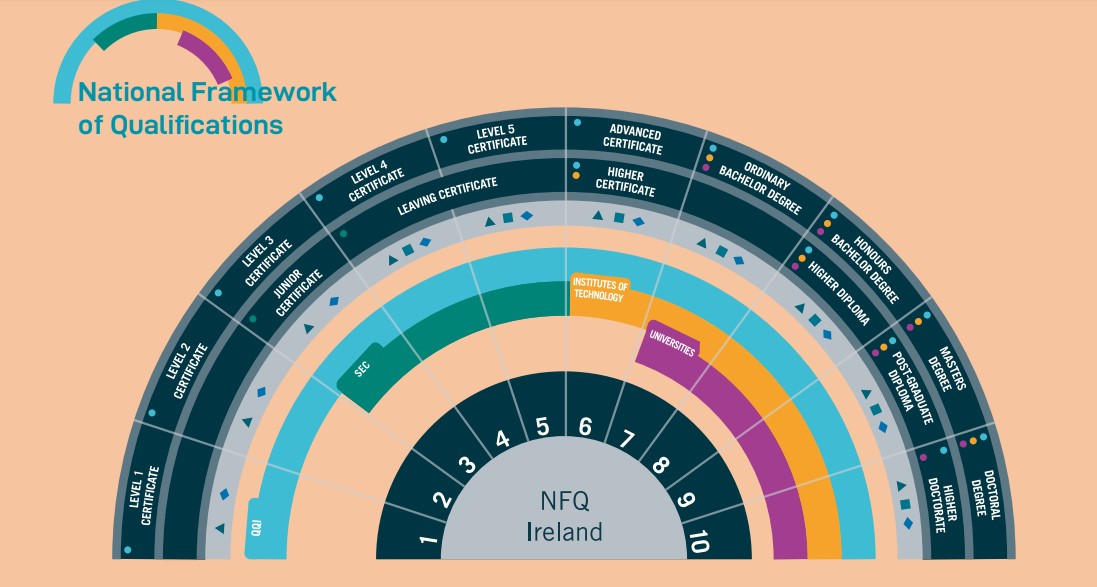
Off-the-job training will also include visits to industry / agricultural research locations. Off-the-job training will be a total of 10 weeks per year. On completion of the programme, the Apprentice will hold a nationally-recognised QQI Higher Certificate in Technical Farm Operations (NFQ Level 6).
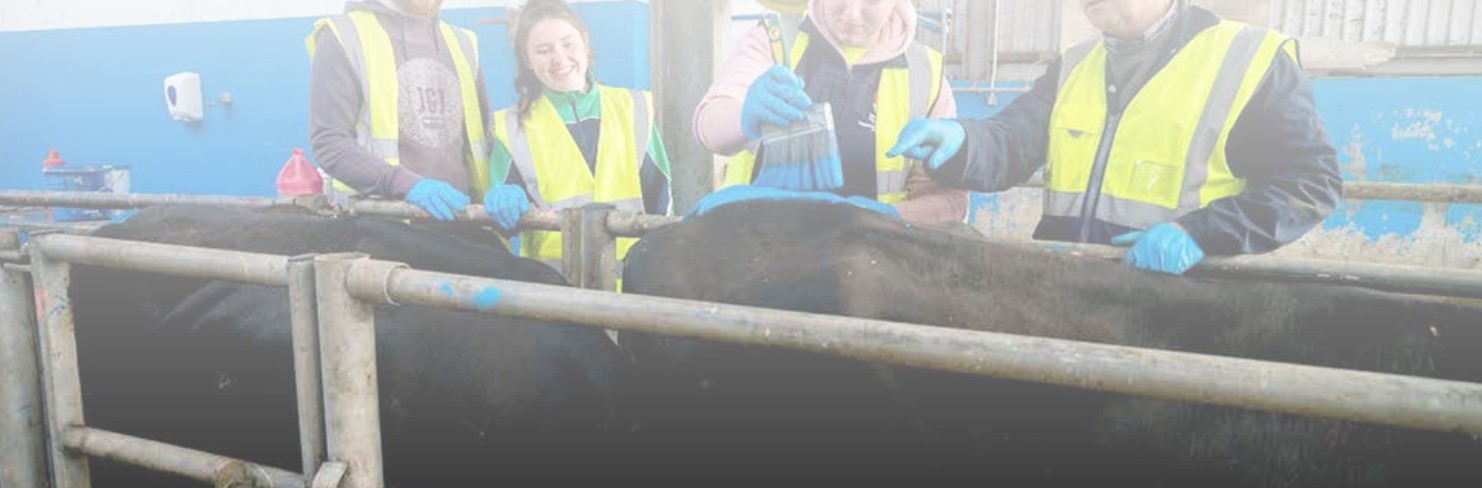
This programme provides apprentices with knowledge of technical farm operations with a strong foundation of sustainable agriculture production, health and safety, quality assurance, business, sustainable and work organisation skills.
The qualified apprentice will be capable of planning, implementing and supervising daily operations in a farm enterprise while observing best practice and complying with legislative, environmental and safety requirements.
To view full details of this occupation, view information from our Careers database for the following occupation: Farm Technician
Entry Requirements
To be eligible for this apprenticeship, an applicant must:
- Be directly employed by a SOLAS approved Employer
- Have achieved a pass in the Leaving Certificate Established (NFQ Level 5)* or Vocational Programme (NFQ Level 5)*, obtaining a minimum grade O6/H7 in Maths** or a F2 in Foundation Maths, and O6/H7 in four other subjects*
OR
- A Major QQI level 5 (or higher) Award*
OR
- Level 6 Specific Purpose in Farming programmes*
OR
- Anyone working in the agricultural sector, 18 years old or older with two full-time years of work experience in a landbased sector (such as farming, agricultural contracting, horticulture, forestry, aquaculture or the equine sector) deemed acceptable by employer and consortium and subject to the validation of supporting evidence and/or assessment process.
*A qualification deemed equivalent on the Irish National Framework of Qualifications to any of the qualifications listed above.
**Note – Where there is a mathematics requirement at Leaving Certificate Established or Vocational Programme, obtaining a minimum grade O6/H7 in Maths or a F2 in Foundation Maths, mature and international applicants may be required to demonstrate that they possess the required competency through the completion of a maths assessment.
The programme is through the medium of English and it is highly desirable that the applicant will meet CEF Level B2 (Common European Framework of Reference for Language). Applicants whose first language is not English may be required to provide evidence of English language proficiency. The certificate of the English language standard must have been issued within 2 years of the expected start of your course.
Training
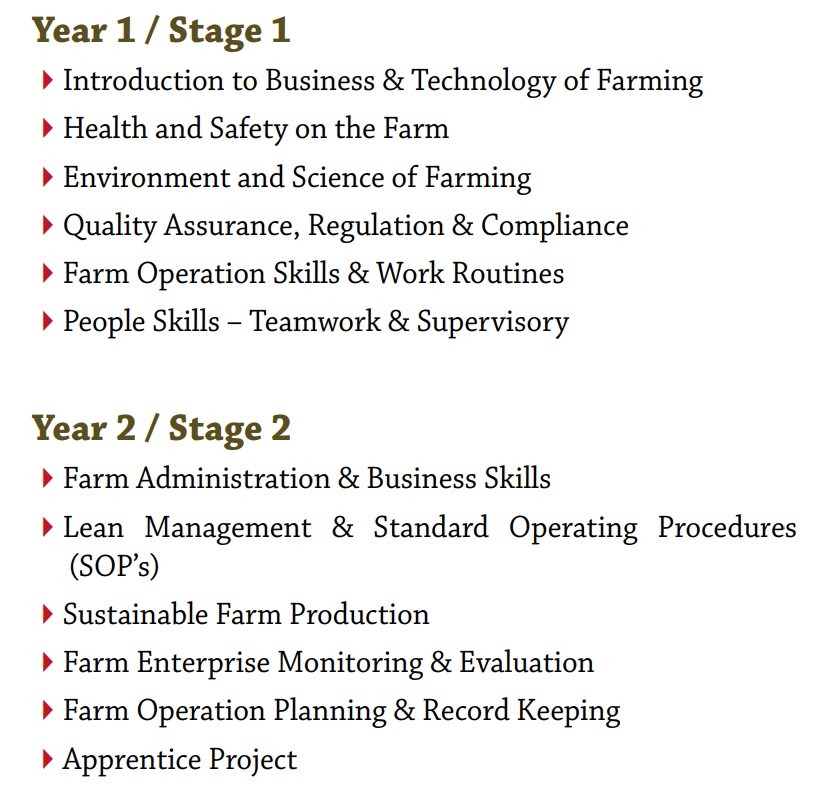
12 Industry-focused Modules over 2 years
Off-the-job College Locations:
- Teagasc, Ballyhaise College, Ballyhaise, Co Cavan. H12 E392
- Teagasc, Clonakilty Agricultural College, Darrara, Clonakilty, Co. Cork. P85 AX52
Apprentices will be trained in a progressive manner and will get to put their skills into practice during both on and off the job training stages. On successful completion, the apprentice will be fully competent in the role of a Farm Technician.
Employers are asked to support employees throughout their learning journey by engaging and facilitating mentor one-to-ones on a regular basis. Employers will be issued with advice on this on induction.
The block release programme has been designed to minimise the impact of the apprentices absence for the employer. Block release allows for employers to plan for the apprentice’s absence throughout the off season. Attendance is compulsory and apprentices will attend classes, practicals, labs and field trips while off-the-job. Examinations will take place also in this period.
The following stages will be completed as part of the Farm Technician Apprenticeship:
Skills & Qualities
Special personal attributes required for performance on the job
- The ability to work under pressure and to meet deadlines;
- The ability to work as part of a multidisciplinary team;
- The ability to take responsibility for assigned tasks;
- Good verbal and written communication skills;
- Good IT skills.
Desirable
- Knowledge of Irish agriculture and agri-industry;
- Knowledge of regulatory/control systems;
- Knowledge of public health and food safety;
- Possess a current full clean driving licence (Category B) and/or access to a car.
>>Want a Career in farming.
>>Want to learn and earn at the same time.
>>Have a good level of physical fitness and enjoy physical activity and work.
>>Want to start work early in the mornings.
>>Have a love for working outdoors and are safety focussed.
>>Have an interest in agriculture and science.
>>Have a solid literacy, verbal and numeracy skills.
>>Have the ability to plan and prepare work.
>>Have good analytical and problem solving skills.
>>Have good computer skills.
>>Have good hand/eye co-ordination, manual dexterity and spatial aptitude.
>>Have good interpersonal skills.
>>Have the ability to work independently and as part of a team.
Work Activities
This programme provides apprentices with knowledge of technical farm operations with a strong foundation of sustainable agriculture production, health and safety, quality assurance, business, sustainable and work organisation skills.
The qualified apprentice will be capable of planning, implementing and supervising daily operations in a farm enterprise while observing best practice and complying with legislative, environmental and safety requirements. This is an excellent opportunity to earn while you learn while gaining valuable experience on commercial farms to progress your career opportunities into farm management. Apprentices will be employed on farms in Ireland in such farming enterprises as:
- Arable
- Cattle
- Dairy
- Pigs
- Poultry
- Sheep
- Suckler cows
Knowledge
- Understand gricultural production systemns.
- Undertand the principles and practice of implementing safety,
health, welfare, and environmental legislation. - Understand the principles of sustainability, food quality, food
assurance, and biosecurity. - Understand farm metrics
- Understand market specification requirements.
- Understand financial transactions and take charge of farm
administration. - Understand work-methodology to efficiently organise routine tasks.
Competences
- Work effectively, autonomously, and safely on a farm.
- Comply with key industry standards and regulatory measures.
- Comply with health, safety, and welfare requirements
- Follow and implement a health and biosecurity plan.
- Plan, prioritise, and schedule farm tasks and organise work.
- Liaise with employer and interact with external third parties.
- Take responsibility for enterprise recording and farm
administration activities. - Understand, interpret, and analyse reports, data, budgets, and
farm plans. - Work independently and as part of a team.
- Solve problems.
- Be self-motivated.
- Be responsible for his/her professional development and self-learning.
Skills
- Take charge of the day-to-day operation of farm enterprises.
- Organise key farm operations such as the feeding, breeding, and welfare of
livestock. - Apply the principles of sustainability, food quality, food assurance, and
biosecurity. - Implement a production plan.
- Plan and apply biosecurity measures.
- Comply with regulatory requirements.
- Operate farm machinery and equipment safely.
- Oversee the maintenance of equipment and farm facilities.
- Maintain records and use farm software.
- Assist with financial records.
Amongst other things, a farm technician apprentice will be able to:
- Carry out and supervise key farm operations.
- Plan and implement a production plan.
- Plan and schedule farm tasks and organise work.
- Operate in compliance with key industry standards and regulatory measures relating to sustainability, biosecurity, food assurance, animal welfare, food safety, traceability and environmental measures.
- Assist in farm planning and enterprise performance evaluation.
- Supervise key farm operations
- Operate to industry standard health and safety standards.
Career Progression
This programme provides apprentices with knowledge of technical farm operations with a strong foundation of sustainable agriculture production, health and safety, quality assurance, business, sustainable and work organisation skills.
The qualified apprentice will be capable of planning, implementing and supervising daily operations in a farm enterprise while observing best practice and complying with legislative, environmental and safety requirements. This is an excellent opportunity to earn while you learn while gaining valuable experience on commercial farms to progress your career opportunities into farm management.
Career Progression & development options:
- Farm Manager Apprenticeship (Ordinary Bachelor Degree in Professional Sustainable Farm Management – NFQ Level 7)
- Springboard conversion courses: NFQ level 8-9
- Skillnets Profesional development courses
- Post graduate course options NFQ level 9-10
Getting this Apprenticeship
To find an apprenticeship, you can search apprenticeship vacancies and a list of currently approved apprentice employers on the Apprenticeship Jobs & Employers Portal. You can search for vacancies by location, and employers in each apprenticeship.
Use this link to explore a list of approved employers by region and by apprenticeship type.
Step 1
To be eligible for this apprenticeship, an applicant must:
- Be directly employed by a SOLAS approved Employer
- Meet the entry requirements.
Step 2
The approved SOLAS Employer will start the registration process with SOLAS (The Further Education & Training Authority).
Step 3
Applicant’s application will be assessed by Teagasc in consultation with SOLAS.
Step 4
If successful, applicant will be registered as an apprentice both with SOLAS and Teagasc.
Step 5
Apprentice will be called for induction training and off-the-job learning block release.
Note – Applicants may be called for an interview to discuss entry qualifications and learner support requirements.
Marcella Phelan National Apprenticeship Programme Co-ordinator Teagasc - Curriculum & Development Standards Unit
Tel +353 516 4408
Email [email protected]
Web www.teagasc.ie/education/
Finding an Employer
Finding an employer or registering your interest with an official Coordinating Provider is one of the first things you need to do to start an apprenticeship.
To find an apprenticeship and secure an apprenticeship work contract you can search apprenticeship vacancies on the Apprenticeship Jobs Portal . You can search for vacancies by location and by apprenticeship type.
Your local Education and Training Board may also hold details of employers seeking to employ an apprentice.
You should also directly connect with local employers who might be interested in taking on an apprentice. It is a great idea to get a part time job with a local employer who might be more inclined to take you on as an apprentice following a successful work experience placement or a part time job contract.
Further information about this apprenticeship may be available from the following organisations on this website:
Pay & Fees
The cost of the apprenticeship is €1,375 per year of the programme. Associated costs such as travel and accomodation for off-the-job block release are extra.