In Summary
A Software Testing Associate works as part of a development team to identify issues, test features and improve software quality. Software Test Engineers begin their careers in software testing across a range of industries including finance, healthcare, manufacturing and digital services.
This is the first Software Testing Associate Apprenticeship of its kind. Developed in collaboration between industry partners and TUS, it offers a nationally recognised qualification while providing learners with a new pathway to gain practical, on-the-job experience.
It is a two-year (24 months) apprenticeship programme leading to a NFQ Level 6 Higher Certificate.
You will develop the knowledge, skills and practical experience required to work in software testing across industries including finance, healthcare, manufacturing and digital services.
Designed for those starting or developing a career in software testing, the programme prepares apprentices to work as part of a development team to identify issues, test features, and improve software quality.
Apprentices gain the skills and experience to investigate defects, validate fixes, document results, and support reliable software releases.
Apprentices spend most of their time in paid, on-the-job training with an approved employer, supported by structured academic learning from TUS. This includes a mix of full-time on-campus study and blended learning through online delivery and scheduled campus sessions.
Graduates can progress to further study at NFQ Level 7 or move into roles in software testing, quality assurance, and software development environments.
Click on the Apprentice Handbook below for more details.
View Occupation Profile from Apprenticeship.ie
To view full details of this occupation, view information from our Careers database for the following occupation: Software Testing Associate
Entry Requirements
This apprenticeship has been developed in collaboration between industry partners and TUS.
It offers a nationally recognised qualification while providing learners with a new pathway to gain practical, on-the-job experience.
This apprenticeship is a two-year (24 months) programme leading to a NFQ Level 6 Higher Certificate.
ENTRY REQUIREMENTS
- Leaving Certificate (or equivalent) with Grade O6/H7 or better in five subjects and a minimum of 250 points (This does not apply to applicants over 23; however, all applicants must follow company and SOLAS recruitment procedures and demonstrate their ability to undertake the programme.)
OR
Non-graduates with at least 5 years' professional experience in a software-related field may be considered under Recognition of Prior Learning (RPL).
AND
- Secure an apprenticeship position with a SOLAS-registered Software Testing Associate employer.
*Note:
Applicants who are non-native English speakers must meet university-approved English language requirements. See TUS for more information on English language requirements.
Training
Developed in collaboration between industry partners and TUS, this apprenticeship offers a nationally recognised qualification while providing learners with a new pathway to gain practical, on-the-job experience.
This is a two-year apprenticeship programme leading to a NFQ Level 6 award.
Year 1
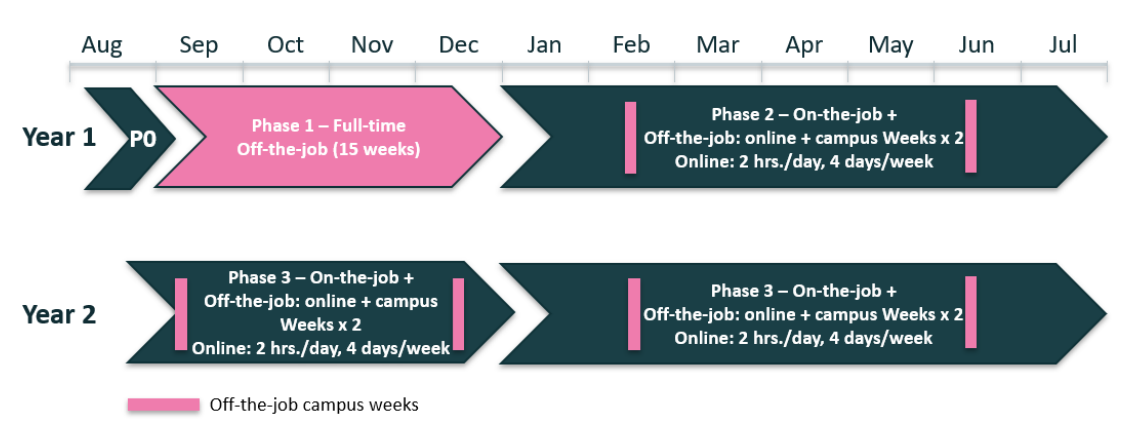
- Apprenticeship begins in the workplace with an induction, followed by an off-the-job phase at university.
- Learn the basics of software testing, development lifecycle, test design, defect reporting, documentation, and communication.
- Continue mainly on-the-job with online sessions and scheduled off-the-job weeks.
- Work alongside developers and testers, gaining practical experience and mentoring in a professional team.
- Work-based learning is supported by online sessions and structured off-the-job weeks.
Year 2
- Continues mainly on-the-job with online sessions and structured off-the-job weeks.
- Focus on test management, automation, quality assurance, and working in agile teams.
- Build problem-solving skills and understand the role of testing in reliable software delivery.
- Work on larger real-world projects, applying structured testing and contributing to team development.
What you will learn
The apprenticeship equips you with the knowledge, skills, and experience to begin a career in software testing across industries such as finance, healthcare, manufacturing, and digital services. You will work as part of a development team to identify issues, test features, and improve software quality, including investigating defects, validating fixes, documenting results, and supporting reliable software releases.
Key Professional Competencies (Software Testing Associate)
- Understanding software testing fundamentals
- Knowledge of the software development lifecycle
- Test design and execution
- Defect reporting and tracking
- Basic awareness of automation
- Analytical and problem-solving skills
- Communication and teamwork
- Professionalism and strong work ethic
Click on the Apprentice Handbook below for more details.
Skills & Qualities
A Software Testing Associate plays a key role in the quality assurance phase of software development and deployment. They perform both automated and manual testing to ensure the software meets its intended purpose and is free of bugs or issues before it is released to end users.
They work as part of a development team to identify issues, test features and improve software quality. The problems they deal with include investigating defects, validating fixes, documenting results and supporting reliable software releases.
Skills
- Design and execute manual and automated test plans
- Set up and manage test environments
- Interpret test results to identify defects and support root cause analysis
- Produce clear and accurate test reports
- Trace tests to requirements and use appropriate test frameworks and automation scripts
- Work effectively within agile teams
- Analyse technical documentation
- Communicate clearly with stakeholders
- Apply structured problem-solving techniques to resolve software testing issues
Qualities
- Attention to detail - able to spot small errors, inconsistencies, and defects in software.
- Analytical thinking - can break down problems, understand systems, and identify root causes.
- Problem-solving mindset - approaches issues logically and works through solutions methodically.
- Curiosity - interested in how software works and motivated to explore edge cases and "what if" scenarios.
- Communication skills - clearly explains issues, writes reports, and collaborates with developers and stakeholders.
- Patience and persistence - willing to test thoroughly and repeat processes to ensure quality.
- Teamwork - works effectively within agile or collaborative development teams.
- Organisation - manages test cases, documentation, and tasks in a structured way.
- Adaptability - open to learning new tools, technologies, and testing methods.
- Professionalism and responsibility - understands the importance of quality, reliability, and meeting deadlines.
Career Interests
This occupation is well-suited to individuals with the following career interests:
Investigative: Enjoy analytical thinking, problem-solving, and intellectually stimulating work. Prefer theory over action and stay engaged with advancements in their field.
Administrative: Thrive in structured environments with clear guidelines. Prefer routine tasks, clerical work, and office-based roles that support organisational efficiency.
Realist: Interested in hands-on work with tools, technology, and machinery. Prefer practical problem-solving, independent work, and action-oriented tasks.
View Career Explorer to learn more about this career.
Work Activities
As a Software Testing Associate, you will work as part of a development team to identify issues, test features and improve software quality.
You may investigate defects, validate fixes, document results and support reliable software releases within a real software development environment.
Software Test Engineers begin their careers in software testing across a range of industries including finance, healthcare, manufacturing and digital services.
They work as part of a development team to identify issues, test features and improve software quality. The problems they deal with include investigating defects, validating fixes, documenting results and supporting reliable software releases.
As an apprentice, you earn while you learn. Your employer pays you a salary while you are completing both on-the-job and off-the-job training. The rate of pay is agreed between you and your employer.
Most commonly reported work tasks
- Design test plans, scenarios, scripts, or procedures.
- Document software defects, using a bug tracking system, and report defects to software developers.
- Identify, analyse, and document problems with program function, output, online screen, or content.
- Develop testing programmes that address areas such as database impacts, software scenarios, regression testing, negative testing, error or bug retests, or usability.
- Participate in product design reviews to provide input on functional requirements, product designs, schedules, or potential problems.
- Document test procedures to ensure replicability and compliance with standards.
- Plan test schedules or strategies in accordance with project scope or delivery dates.
- Conduct software compatibility tests with programmes, hardware, operating systems, or network environments.
- Test system modifications to prepare for implementation.
- Monitor bug resolution efforts and track successes.
View Career Explorer to learn more about work tasks and work environments.
View the Apprentice Handbook below for more details.
Career Progression
This apprenticeship has been developed in partnership between industry and TUS.
It offers a nationally recognised qualification while providing learners with a new pathway to gain practical, on-the-job experience.
This apprenticeship is a two-year (24 months) programme leading to a NFQ Level 6 Higher Certificate.
Immediate Opportunities
- Software Test Engineers begin their careers in software testing across a range of industries including finance, healthcare, manufacturing and digital services.
- Entry‑level testers and QA professionals such as Software Tester, QA Analyst, or Test Engineer, working to verify software quality and support development teams in sectors like finance, healthcare, and technology.
- Automation testing and QA roles that involve designing and executing automated test scripts or frameworks for modern software delivery.
- Opportunities to work with tools such as Selenium, Playwright, and Azure DevOps-common skills sought by employers.
- Job vacancies across Ireland, including QA Engineer, Test Lead, and Senior QA positions, in companies in Dublin, Cork, Galway and beyond.
Career and Professional Development
- Progression into specialised roles such as Test Automation Engineer, SDET (Software Development Engineer in Test), or QA Lead, as experience and skills grow.
- Professional certifications such as those from the International Software Testing Qualifications Board (ISTQB) to enhance credentials and broaden opportunities.
- Further education and career pathways through higher education or NFQ progression, such as further study at Level 7, or advance into roles in software testing, quality assurance, and software development environments within their sector.
- Engagement with tech career development communities and platforms like FIT - Tech Apprenticeships to explore related tech apprenticeships and skills pathways.
These opportunities reflect the growing demand for software testing and QA skills in Ireland's tech sector, with a variety of roles across industries and the potential to advance into more technical or managerial positions as experience increases.
Advancement and Promotion
Where apprentices have the necessary ability, initiative, and basic qualifications, opportunities are available for advancement.
- People in employment have several options for both Educational and Career Progression. It might also be possible to gain promotion within your existing company.
- By using your existing qualifications and experience you may be able to secure an alternative position in a more senior role in another company.
- It may also be possible to set up your own company based on your existing qualifications and experience.
On completion of an apprenticeship your educational progression options may be offered as full awards on the NFQ levels 7-10 National Framework . You may also decide to embark on a partial award or to upskill in a particular area by undertaking a short, specialised course.
Useful Links for Career Progression
You may also decide to embark on a partial award or to upskill in a particular area by undertaking a short, specialised course. Depending on your skills, knowledge, and experience, some of the opportunities below may be appropriate to help develop your Career pathway.
- Springboard & conversion courses
- Skillnet Sector learning network courses
- Skills to advance Local ETB Board
- Further education training centres Fetchcourses
- Post graduate education Search Post Graduate options
Enterprise and Self-Employment Support:
On completion of an apprenticeship you may decide to set up your own business. The links below may be useful to support your entrepreneurial journey:
- Local Enterprise Offices For profit Local enterprise support
- Local Area partnerships For profit enterprise support
- Social entrepreneurs Not-for-profit enterprise support
- Franchising Developing your business under an established franchise
CAO higher education Full time NFQ level 7-8 education Search CAO Course Finder
Springboard Courses full, part time, blended online & in person skill conversion programmes NFQ level 6-9 Search Springboard Courses
Skillnet Industry Networks Marketing, ICT skills, design sector led skills and training programmes across Digital marketing & media production Search Skillnets Courses
Post Graduate study post graduate career development programmes Search Postgrad Courses
Getting this Apprenticeship
This apprenticeship has been developed in collaboration between industry partners and TUS.
It offers a nationally recognised qualification while providing learners with a new pathway to gain practical, on-the-job experience.
This apprenticeship is a two-year (24 months) programme leading to a NFQ Level 6 Higher Certificate.
To become an apprentice in Ireland, you must be employed by an approved apprenticeship employer. Apprenticeship employers are formally approved in advance of employing apprentices, and apprentices receive a formal contract of employment.
To find an apprenticeship, you can search for vacancies on the Apprenticeship Jobs page .
Your local Education and Training Board (ETB) may also hold details of employers seeking to employ an apprentice.
Full eligibility criteria for this apprenticeship are available in the Software Testing Associate Apprenticeship Handbook .
HOW TO BECOME A SOFTWARE TESTING APPRENTICE
Step 1: Make sure you meet the apprenticeship entry requirements.
Step 2: Find and apply for a vacancy with a SOLAS-approved employer.
Step 3: Successfully complete each stage of the employer's recruitment process.
Step 4: Keep an eye on apprenticeship opportunities – these are advertised locally, nationally, and on the National Apprenticeship Jobs Portal
Step 5: Learn more about apprenticeships and the process on the Generation Apprenticeship website .
Further information is also available from TUS at the contact details below:
Tel: 061 293165
Email: [email protected]
Web: https://tus.ie/apprenticeships/consortia-led-apprenticeships/
Finding an Employer
Finding an employer or registering your interest with an official Coordinating Provider is one of the first things you need to do to start an apprenticeship.
To find an apprenticeship and secure an apprenticeship work contract you can search apprenticeship vacancies on the Apprenticeship Jobs Portal . You can search for vacancies by location and by apprenticeship type.
Your local Education and Training Board may also hold details of employers seeking to employ an apprentice.
You should also directly connect with local employers who might be interested in taking on an apprentice. It is a great idea to get a part time job with a local employer who might be more inclined to take you on as an apprentice following a successful work experience placement or a part time job contract.
Online Job Sites
Here are some direct links to employment websites that frequently list apprenticeship vacancies.
Note: These websites may include vacancies that are not QQI accredited Apprenticeships.






Pay & Fees
As an apprentice, you earn while you learn. Your employer pays you a salary while you are completing both on-the-job and off-the-job training. The rate of pay is agreed between you and your employer.
Apprentices complete their off-the-job training in a higher education institution and are required to pay a student contribution of €2,400 per year.
This contribution is paid directly to the higher education institution over the duration of the programme. The fee may also be sponsored by your employer, depending on your individual employment agreement.