Work Environment
This occupation is typically found in the following Career Sector(s):




Videos & Interviews

Cathal Quigley, Marine Engineering Officer
Lieutant Cathal Quigley is a Marine Engineering Officer (MEO) leading a team of 15 people on board an Irish Navy Vessel. At sea, ships need to make their own fresh water and electricity and maintain all other services that a small town would require. It’s the MEO's job to provide these services, from treating waste water to maintaining the ships two engines. The marine engineer is also the ships fire officer, responsible for fighting fires onboard.


Brendan Cavanagh, Ships Engineer
Brendan is currently a second engineer operating out of Killybegs in Donegal. He completed his Leaving Cert in Carndonagh Community School in 2001. He has studied several courses at the National Fisheries College and expects to complete his Class 1 Certificate next year.


Videos on the Web
- Marine Engineer- from: Youtube Search
- Marine Engineer- from: YouTube Video
- Marine Engineer- from: BIM Ireland [Videos]
Most commonly reported Work Activities
- Getting Information Observing, receiving, and otherwise obtaining information from all relevant sources.
- Evaluating Information to Determine Compliance with Standards Using relevant information and individual judgment to determine whether events or processes comply with laws, regulations, or standards.
- Making Decisions and Solving Problems Analysing information and evaluating results to choose the best solution and solve problems.
- Drafting, Laying Out, and Specifying Technical Devices, Parts, and Equipment Providing documentation, detailed instructions, drawings, or specifications to tell others about how devices, parts, equipment, or structures are to be fabricated, constructed, assembled, modified, maintained, or used.
- Interacting With Computers Using computers and computer systems (including hardware and software) to program, write software, set up functions, enter data, or process information.
- Communicating with Supervisors, Peers, or Subordinates Providing information to supervisors, co-workers, and subordinates by telephone, in written form, e-mail, or in person.
- Identifying Objects, Actions, and Events Identifying information by categorising, estimating, recognising differences or similarities, and detecting changes in circumstances or events.
- Updating and Using Relevant Knowledge Keeping up-to-date technically and applying new knowledge to your job.
- Communicating with Persons Outside Organisation Communicating with people outside the organisation, representing the organisation to customers, the public, government, and other external sources. This information can be exchanged in person, in writing, or by telephone or e-mail.
- Analysing Data or Information Identifying the underlying principles, reasons, or facts of information by breaking down information or data into separate parts.
Working Life
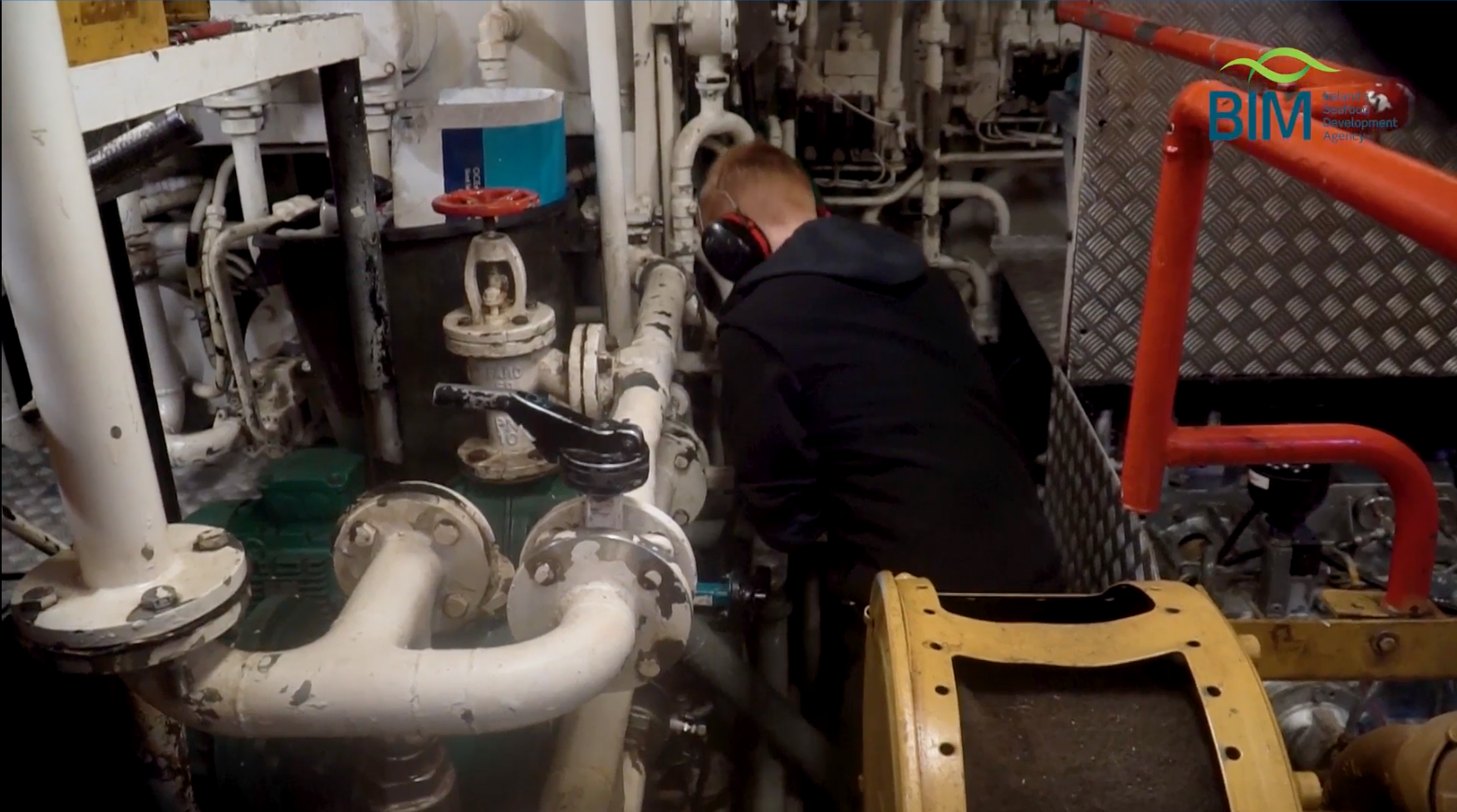
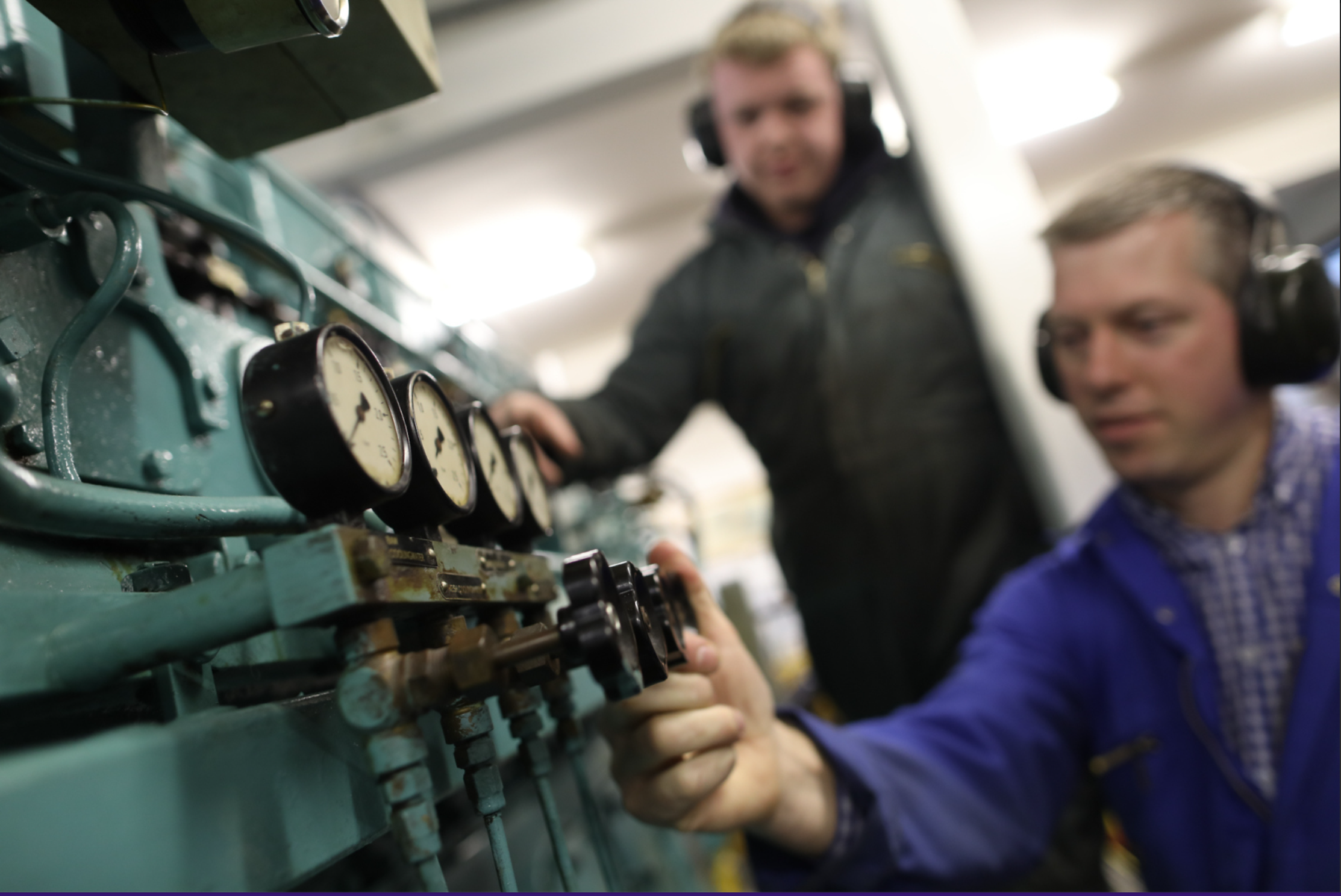
Marine engineers are responsible for maintaining and repairing a ship’s main propulsion systems to ensure safe, reliable and efficient operation.
They also look after all auxiliary machinery on board, such as generators, pumps, refrigeration systems, winches, ventilation equipment, and other electrical and electronic components.
At sea, engine-room duties are normally organised into watches to provide continuous supervision of the vessel’s machinery.
Under merchant shipping regulations, Irish-registered vessels with more than 750 kW of propulsion power must carry Engineer Officers who hold the appropriate Certificate of Competency.
The work of a marine engineer is varied and depends on whether they are based at sea or on shore. At sea, marine engineers operate, maintain, and repair engines, generators, and other vital systems to keep vessels running safely and efficiently. On shore, they may work in shipyards, design offices, or offshore energy projects, focusing on vessel design, maintenance planning, inspections, and ensuring compliance with environmental and safety regulations.
Key Responsibilities and & Tasks:
Engine Operation
- Maintain and repair main engines, generators, pumps, and other machinery.
System Maintenance
- Operate and monitor propulsion and power systems during voyages.
- Monitor engine performance and fuel consumption to optimise efficiency.
Technical Management
- Inspect and service electrical and electronic equipment.
- Respond to mechanical or electrical faults and carry out emergency repairs at sea.
Safety Compliance
- Conduct regular safety checks and ensure compliance with environmental and maritime safety standards.
- Record maintenance activities and system performance in engineering logs.
Crew Supervision
- Supervise and coordinate engine room personnel.
- Assign and oversee watch duties during voyages.
Marine Engineering Roles
- Marine Engineer – Designs and maintains ship engines and machinery
- Naval Architect – Plans and designs new ships and structures
- Offshore Engineer – Builds and maintains oil, gas, or wind installations
- Ocean Engineer – Develops underwater systems and marine technology
- Marine Technician – Repairs and tests ship or offshore equipment
- ROV Pilot / Technician – Operates underwater drones for inspection and repair
- Renewable Energy Engineer – Works on offshore wind or tidal power systems
- Hydrodynamics Engineer – Studies water flow to improve ship design
- Marine Surveyor – Inspects vessels for safety and regulatory standards
- Shipyard Production Engineer – Manages shipbuilding, fitting, and maintenance projects
Competences
A marine engineer needs strong technical skills in ship systems, engines, and hydraulics, as well as the ability to solve problems quickly and work well in a team. Employers also value attention to detail, adaptability, and reliability, as engineers often work in challenging and constantly changing conditions at sea or in shipyards.
Most commonly reported Work Tasks
- Design complete hull and superstructure according to specifications and test data, in conformity with standards of safety, efficiency, and economy.
- Supervise other engineers and crew members and train them for routine and emergency duties.
- Study design proposals and specifications to establish basic characteristics of craft, such as sise, weight, speed, propulsion, displacement, and draft.
- Perform monitoring activities to ensure that ships comply with international regulations and standards for life-saving equipment and pollution preventatives.
- Oversee construction and testing of prototype in model basin and develop sectional and waterline curves of hull to establish center of gravity, ideal hull form, and buoyancy and stability data.
- Evaluate performance of craft during dock and sea trials to determine design changes and conformance with national and international standards.
- Prepare plans, estimates, design and construction schedules, and contract specifications, including any special provisions.
- Check, test, and maintain automatic controls and alarm systems.
- Design layout of craft interior, including cargo space, passenger compartments, ladder wells, and elevators.
- Evaluate operation of marine equipment during acceptance testing and shakedown cruises.
Further Information
- Marine Craftsperson- from: N.C.S. [UK]
- Marine Engineer- from: N.C.S. [UK]
- Marine Engineering Technician- from: N.C.S. [UK]
- Merchant Navy Engineering Officer- from: N.C.S. [UK]
Qualities - Marine Engineer
Marine engineers need a blend of technical ability and personal qualities that enable them to work safely, effectively, and professionally at sea or on shore.
Qualities
- Practical, hands-on, and mechanically minded
- Strong problem-solver, especially under pressure
- Attention to detail and safety-focused
- Technically competent in engines, systems, and machinery
- Good teamwork and communication skills
- Able to work independently and take responsibility
- Adaptable to changing conditions at sea or in shipyards
- Physically fit with good stamina
- Comfortable working in confined spaces and challenging environments
- Willing to spend long periods away from home
- Strong analytical and troubleshooting abilities
- Reliable, disciplined, and well-organised
If you enjoy working with machinery, solving practical problems, and understanding how things operate, you may find a rewarding career in marine engineering.
You will need a curious and analytical mind, along with a strong interest in mechanical and technical systems. Problem-solving skills are essential, combining logical thinking with creativity and an openness to new ideas.
Marine engineering is a rapidly changing field, so you must be prepared to learn continuously and keep up to date with new technology.
Good communication and interpersonal skills are important, especially when working as part of a team at sea.
You may also manage maintenance schedules, budgets, and reports, so strong organisational, writing, and numerical skills are useful. Confidence with computer-based systems and technical software is increasingly important.
If you progress to supervising or training other engineers or technicians, leadership skills—such as the ability to motivate and guide others—will be essential.
Normal colour vision is also required for this work.
Interests - Marine Engineer
This occupation is typically suited for people with the following Career Interests:
Realist
Realists are usually interested in 'things' - such as buildings, mechanics, equipment, tools, electronics etc. Their primary focus is dealing with these - as in building, fixing, operating or designing them. Involvement in these areas leads to high manual skills, or a fine aptitude for practical design - as found in the various forms of engineering.
Realists like to find practical solutions to problems using tools, technology and skilled work. Realists usually prefer to be active in their work environment, often do most of their work alone, and enjoy taking decisive action with a minimum amount of discussion and paperwork.
Investigative
The Investigative person will usually find a particular area of science to be of interest. They are inclined toward intellectual and analytical activities and enjoy observation and theory. They may prefer thought to action, and enjoy the challenge of solving problems with sophiscticated technology. These types prefer mentally stimulating environments and often pay close attention to developments in their chosen field.
Naturalist
Not surprisingly, some aspect of the natural sciences will run through the Naturalist's interests - from ecological awareness to nutrition and health. People with an interest in horticulture, land usage and farming (including fish) are Naturalists.
Some Naturalists focus on animals rather than plants, and may enjoy working with, training, caring for, or simply herding them. Other Naturalists will prefer working with the end result of nature's produce - the food produced from plants and animals. Naturalists like solving problems with solutions that show some sensitivity to the environmental impact of what they do. They like to see practical results and prefer action to talking and discussing.
Entry / Progression - Marine Engineer
Typical entry routes include a Bachelor’s degree in Marine or Mechanical Engineering plus sea-time through cadetships or engineering training offered by Irish shipping companies. Engineering courses specific to the fishing industry are offered through An Bord Iascaigh Mhara (BIM).
Opportunities exist with shipping companies, ports, offshore energy firms, and regulatory bodies, offering both sea-going and shore-based roles.
Naval Pathways
The Irish Naval Service provides a Marine Engineering cadetship for prospective naval officers. Training includes NMCI* degree, sea postings, and military-specific maritime operations.
*National Maritime College of Ireland
Ships Engineer
Those interested in becoming a ship’s engineer usually apply directly to a shipping company, many of which sponsor cadets through a recognised training programme. Training structures vary by company but typically combine academic study with required sea time. Some engineers may wish to enter through Irish Naval Service pathways, while others progress through the Irish Mercantile Marine and commercial cadet programmes.
In Ireland, marine engineer cadets normally study for a BEng in Marine Engineering at the National Maritime College of Ireland (NMCI). This degree, combined with a full year of approved sea service, forms the Marine Engineer Cadet Training Scheme. Passing the degree examinations may qualify cadets for exemptions from parts of the Department of Transport’s Certificates of Competency for Second Engineer Officer and Chief Engineer Officer.
The programme provides a solid grounding in marine engineering, ship systems, and wider maritime operations, alongside the engineering knowledge required of marine engineering officers.
Further details are available from NMCI and the relevant maritime authorities.
Key Skills: Seafarers & Maritime Skills
Career Pathways
Sample career pathways for a marine engineer in Ireland include: progressing from a junior or trainee engineer role at sea to Chief Engineer; transitioning ashore into positions such as Technical Superintendent or Marine Surveyor; specialising in offshore engineering or naval architecture; or working in regulatory and safety functions within the Marine Survey Office (MSO) or Maritime Area Regulatory Authority (MARA).
- At-Sea Progression: Junior / Officer roles → Chief Engineer.
- Shore-Based Engineering: Technical Superintendent, Maintenance Manager, Marine Superintendent.
- Survey & Regulation: Marine Engineer Surveyor for the MSO/MARA.
- Naval Architecture: Design and assessment roles such as Naval Architect Surveyor in MSO.
- Offshore Engineering: Working on energy vessels, supply ships, or wind‑farm vessels. (Supported by courses at NMCI.)
*These pathways are for illustrative purposes only and may vary depending on experience and training.
IMDO Career Development Pathways mercantile and maritime career development for Marine Engineer.
Leaving Certificate Subjects that would benefit the role of a marine engineer include:
- Engineering
- Mathematics
- Chemistry
- Physics
- Technology
Sample Education and Training Pathways
A number of courses are available throughout the country that focus on learning and skills that may be useful for this career. The examples and links below may guide you in your research.
Further Education (FET)
Further Education & Training (FET) Courses are delivered by local ETBs, ranging in duration from several weeks up to 20 months. Courses are designed to meet the labour market needs and often include a large element of work experience.
Example search terms include: engineering operations, engineering technology.
Search for FET Courses
PLC Courses (FET)
PLC courses are full-time courses, one or two years duration, with awards at Level 5 and 6 on the NFQ. They are offered nationally in Schools and Colleges of Further Education.
Example search terms include: civil, mechanical, electronics engineering, engineering, electronic technology, pre-university engineering, preliminary, engineering pre university, engineering technology.
Search for PLC Courses
Higher Education CAO (Undergraduate)
Higher Education courses at Levels 6 to 8 on the NFQ, delivered in Universities and Technological Universities & Institutes. Courses run from 2 – 5 years and places are allocated on a points-based system, processed by the Central Application Office.
Example search terms include: general engineering, electronic, mechanical engineering, marine engineering.
Search for CAO Courses
Higher Education (Postgraduate)
Postgraduate courses are courses at Levels 9 and 10 on the NFQ and usually last 1 – 2 years full time, or longer if a PhD or part time. Entrants typically require an undergraduate award (Level 8).
Example search terms include: Marine Engineering MSc Ireland, Maritime Technology postgraduate, Naval Architecture Master’s Ireland, Offshore Engineering postgraduate, Maritime Safety and Environmental Management MSc.Professional Development.
Professional development (CPD) courses are specialised training, formal education, or advanced professional learning that improves skills, professional knowledge, competency, and overall effectiveness in the professional world.
An Bord Iascaigh Mhara (BIM) Your skills & knowledge of Maritime career can be developed via courses in one of Ireland National Fisheries & Maritime centre See NMCI
Check the Useful Contacts tab on this page to see if there are any professional bodies listed who may provide training related to this career.
Pay & Salary - Marine Engineer
Salary Range (thousands per year)* €35k - €91k
Salaries vary based on employer, location, experience, duties, and role.
Data Source(s):
Eirieri/ Glassdoor/ Indeed/ Morgan McKinley/ WEI
Last Updated: July, 2024
Labour Market Updates - Marine Engineer
Note: The following information relates to occupations that include: Mechanical engineers, Electrical engineers, Electronics engineers, Engineering professionals n.e.c.
This information has been derived from the Solas National Skills Bulletin (2025).
Employment levels grew strongly between 2023 and 2024 (by 6,300 persons), resulting in above average annual employment growth over the five-year period. Almost half were employed in the professional activities sector with a further quarter employed in industry. At 29%, the share of non-Irish citizens was above average which is borne out in the employment permit data, with over 1,300 new permits issued in 2024 primarily for electrical, mechanical, automation and project engineers.
Skills for Growth data highlighted issues in the utilities and manufacturing sectors, particularly relating to mechanical, electrical and lead instrumentation engineers; with automation, mechanical and electrical engineers also identified as roles which were difficult-to-fill in the Recruitment Agency Survey. Experience (usually at least 2 years) was a key demand along with technical (biomedical, electrical/power engineering, life sciences etc.), finance, leadership, and digital (including data analysis and AI) skills.
These skills play a critical role in Ireland’s industrial sector, particularly in the life sciences, and in the transition to a digital and green economy. As such, demand is likely to persist for these roles. Although the supply of skills from the education and training system appears strong, the recent employment growth and the demand for specific skills and experience means that skills shortages are persisting.
Skills shortage:
Engineers (mechanical, electrical, automation)
Useful Contacts - Marine Engineer
-
IMDO – Irish Maritime Development Office
- Three Park Place, Upper Hatch Street, Dublin 2, D02 FX65. Ireland
- (01) 7753900
- [email protected]
- Click Here
-
Bord Iascaigh Mhara (BIM)
- Crofton House, Crofton Road, Dun Laoghaire, Co. Dublin
- (01) 214 4100
- Click Here
-
National Maritime College of Ireland