Videos & Interviews


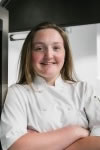


Audrey Cahatol, Pastry Chef
A talented and creative Culinary Arts graduate from TUD, Audrey has quickly risen to Senior Chef de Partie at Library Steet Restaurant in Dublin. She shares her inspiration for following a career path into the kitchen and tells us what she loves about her job and working with a team of talented chefs.

Videos on the Web
- Chef de Partie- from: Youtube Search
Working Life
A Chef de Partie is trained to:
- Deliver advanced culinary skills in a professional kitchen;
- Supervise a particular area or station within the kitchen;
- Work on their own as well as train Commis Chefs
The Chef de Partie Apprenticeship programme is designed to expose you to a wide range of culinary skills and ideas and allows you to not only learn how to do something, but understand why it is done a certain way.
Qualities -
The Chef de Partie will have the knowledge, skills and competence in a broad range of varied and complex function areas and tasks. She/he is highly skilled in managing a station in the kitchen, carrying out advanced culinary tasks/ responsibilities which include Food Production, Cooking, HACCP, Costing, Menu Design and Development etc.) and working autonomously at this level. S/he will be capable of supervising and managing a small team of demi & commis chefs, and of undertaking additional tasks as deemed appropriate by their senior chef/business manager.
Knowledge
Culinary:
- Demonstrate a specialised knowledge of the theory relating to culinary arts across a broad range of disciplines.
- Identify factors which influence the development of dishes and menus taking into account global trends, customer preferences, use of seasonal and local produce.
- Establish the use of technology to support the development and production of dishes and menu items in the work place.
- Understand the principles of food preparation and cooking; traditional and modern cuisine; taste; allergens; diet and nutrition to produce dishes and menu items that meet business and customer requirements.
- Understand the preparation, cooking and finishing methods used to produce advanced dishes.
- Identify how to maximise yield and quality, and minimise wastage of ingredients and other resources.
- Know the role of gastronomy and appreciate the historical and contemporary influences on culinary arts.
Food Safety:
- Understand the food safety practices and procedures to ensure the safe preparation and cooking of food in line with food safety legislation.
- Comply and enforce in-house HACCP procedures.
People:
- Know how to instruct, coach and motivate others in a constructive manner to deliver high quality dishes and menu items.
- Understand the role and importance of both back and front of house team-working has to play in delivering a quality product and service.
- Understand the fundamentals of cultural diversity in the work place.
- Understand the principles of training and development to maximise the performance of the entire team.
Business:
- Identify how the business strategy, customer profile, culture and constraints influence the development of creative, profitable and competitive menus.
- Understand the principles of profit and loss, and support the overall financial performance of the business through operating efficiently to reduce wastage and deliver profit margins.
- Understand the principles of supply chain management, sustainable procurement and working practices in the kitchen.
- Recognise and understand legislative responsibilities and the importance of protecting peoples’ health, safety and security.
- Know the principles of risk assessment and how to identify, plan for and minimise risks to the service and operation.
Skills
Culinary:
- Apply principles of food and beverage cost and quality control within the context of best practice in terms of health and safety at work, food safety and general work practices.
- Demonstrate a range of advanced craft preparation and cooking skills and techniques to develop and produce quality dishes and menu items in line with business requirements.
- Contribute to reviewing and refreshing menus and dishes.
- Develop and use effective plans which reflect the most appropriate methods for maximising yield and minimising waste when producing quality dishes and menu items in line with business requirements.
- Work autonomously and methodically handling many tasks at once, directing others as appropriate, and ensuring they are completed at the right moment and to the required standard.
Food Safety:
- Prepare, cook and present food to agreed food safety practices and guidelines, with food safety management procedures followed and recorde.
- Ensure ingredients are stored, prepared, cooked and presented to deliver a quality product that is safe for the consumer.
People:
- Know how to instruct, coach and motivate others to produce high quality dishes and menu items.
- Maintain harmony across the team and with colleagues in other parts of the organisation, identifying and dealing with problems constructively.
- Use effective methods of communication and operate in a fair and empathic manner.
- Actively develop own skills and knowledge, and those of the team, through training and experience.
Business:
- Contribute to the costing of dishes, monitor the use of ingredients and other resources, yield, wastage and portion sizes to control costs. Use sustainable working practices and encourage and support others to do the same.
- Risk-assess situations, identifying and isolating matters of concern, by establishing the cause and intervening accordingly to minimise any risk to people and comply with legislation.
Interests - Chef de Partie
This occupation is typically suited for people with the following Career Interests:
Naturalist
Not surprisingly, some aspect of the natural sciences will run through the Naturalist's interests - from ecological awareness to nutrition and health. People with an interest in horticulture, land usage and farming (including fish) are Naturalists.
Some Naturalists focus on animals rather than plants, and may enjoy working with, training, caring for, or simply herding them. Other Naturalists will prefer working with the end result of nature's produce - the food produced from plants and animals. Naturalists like solving problems with solutions that show some sensitivity to the environmental impact of what they do. They like to see practical results and prefer action to talking and discussing.
Enterprising
Enterprising people like situations that involve using resources for personal or corporate economic gain. Such people may have an opportunistic frame of mind, and are drawn to commerce, trade and making deals. Some pursue sales and marketing occupations. Many will eventually end up owning their own business, or in management roles in larger organisations. They tend to be very goal-oriented and work best when focused on a target. Some have an entrepreneurial inclination.
Creative
Creative people are drawn to careers and activities that enable them to take responsibility for the design, layout or sensory impact of something (visual, auditory etc). They may be atrracted to the traditional artistic pursuits such as painting, sculpture, singing, or music. Or they may show more interest in design activities, such as architecture, animation, or craft areas, such as pottery and ceramics.
Creative people use their personal understanding of people and the world they live in to guide their work. Creative people like to work in unstructured workplaces, enjoy taking risks and prefer a minimum of routine.
Entry / Progression - Chef de Partie
Pay & Salary - Chef de Partie
* The lower figures typically reflect starting salaries. Higher salaries are awarded to those with greater experience and responsibility. Positions in Dublin sometimes command higher salaries.
View Salary
information from Indeed.ie
Note: data not aways available