

Most commonly reported Work Activities
- Getting Information Observing, receiving, and otherwise obtaining information from all relevant sources.
- Analysing Data or Information Identifying the underlying principles, reasons, or facts of information by breaking down information or data into separate parts.
- Interacting With Computers Using computers and computer systems (including hardware and software) to program, write software, set up functions, enter data, or process information.
- Communicating with Supervisors, Peers, or Subordinates Providing information to supervisors, co-workers, and subordinates by telephone, in written form, e-mail, or in person.
- Identifying Objects, Actions, and Events Identifying information by categorising, estimating, recognising differences or similarities, and detecting changes in circumstances or events.
- Updating and Using Relevant Knowledge Keeping up-to-date technically and applying new knowledge to your job.
- Processing Information Compiling, coding, categorising, calculating, tabulating, auditing, or verifying information or data.
- Thinking Creatively Developing, designing, or creating new applications, ideas, relationships, systems, or products, including artistic contributions.
- Making Decisions and Solving Problems Analysing information and evaluating results to choose the best solution and solve problems.
- Interpreting the Meaning of Information for Others Translating or explaining what information means and how it can be used.
The Work
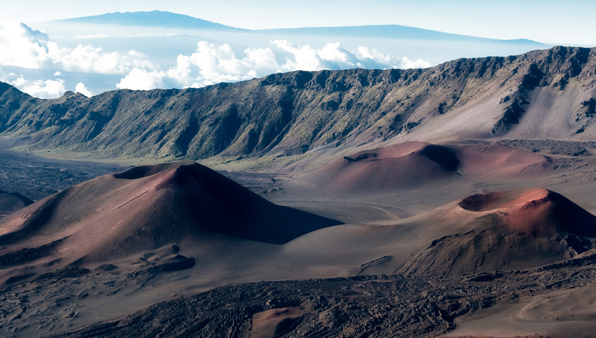
Geologists study the origins, structure and composition of the Earth. They can find out information about the Earth by examining rocks, minerals, crystals, steam sediments and fossils.
They may work for oil, mining or specialist survey companies, using their knowledge to find and extract natural resources like oil, coal, water and uranium. In oil exploration, geologists must be very confident that the right area has been found before drilling begins. They also need to know what type of structure is being drilled, and how stable it is. This information may be obtained by taking rock samples. Most oil companies have research laboratories, where geologists try to improve discovery techniques. They will also spend time doing fieldwork, possibly in remote areas, both at sea and on land.
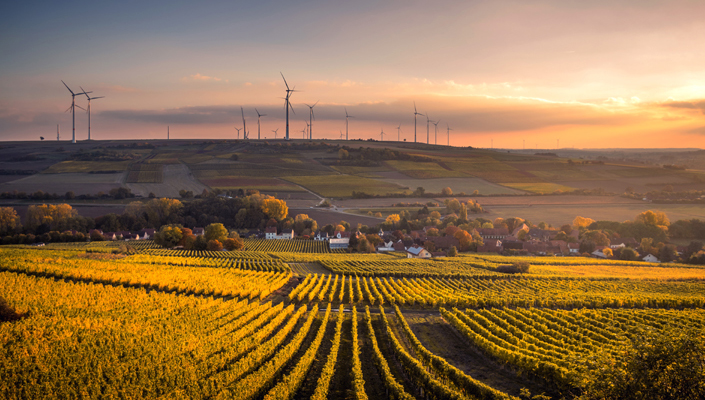
Geologists are now searching for new oil sites, for example, in the North Atlantic. Some geologists investigate the use of geothermal power (stored heat from inside the Earth) as an alternative energy source. Iceland gets most of its energy from heat stored in recently molten volcanic rock.
Rainfall may also be stored in rocks below ground. Hydrogeologists are experts at finding and managing underground water resources. This work is especially important in very hot countries, where most water may be below ground.
Some geologists monitor and observe the behaviour of earthquakes and volcanoes, using their research to predict eruptions and earthquakes more reliably.
With any type of geological engineering or development, careful study must be made of the possible impact on the environment, including people, animals, buildings, roads and railways. A range of geological data may be sampled before any work takes place, including the type and thickness of underlying bedrock. Geologists must take into account faults and weaknesses in the area, which may cause drainage problems, or instability. They also work with mining companies to help them to identify where ore deposits are located.
Most commonly reported Work Tasks
- Plan or conduct geological, geochemical, or geophysical field studies or surveys, sample collection, or drilling and testing programs used to collect data for research or application.
- Analyse and interpret geological data, using computer software.
- Investigate the composition, structure, or history of the Earth's crust through the collection, examination, measurement, or classification of soils, minerals, rocks, or fossil remains.
- Analyse and interpret geological, geochemical, or geophysical information from sources, such as survey data, well logs, bore holes, or aerial photos.
- Identify risks for natural disasters, such as mudslides, earthquakes, or volcanic eruptions.
- Prepare geological maps, cross-sectional diagrams, charts, or reports concerning mineral extraction, land use, or resource management, using results of fieldwork or laboratory research.
- Communicate geological findings by writing research papers, participating in conferences, or teaching geological science at universities.
- Locate and estimate probable natural gas, oil, or mineral ore deposits or underground water resources, using aerial photographs, charts, or research or survey results.
- Advise construction firms or government agencies on dam or road construction, foundation design, land use, or resource management.
- Measure characteristics of the Earth, such as gravity or magnetic fields, using equipment such as seismographs, gravimeters, torsion balances, or magnetometers.
Further Information
Qualities - Geologist
Geologists must be responsible, self-reliant, well-motivated and have good communication skills.
The Field Geologist needs to be in good physical condition, able to cope with differing weather conditions, and have sharp eyesight.
The Geologist may often have to take sole charge of a project and will, therefore, require the ability to organise and lead a mixed group of people.
He or she must be prepared to work, if overseas, in remote terrains and be prepared to travel widely as project requirements dictate.
However, not all Geologists engage in field work. Geology is a multi-disciplinary subject and there are many branches involving laboratory or aerial photographic studies.
Geologists should be enthusiastic about their science, have good powers of observation, good judgement and logical thought.
Interests - Geologist
This occupation is typically suited for people with the following Career Interests:
Investigative
The Investigative person will usually find a particular area of science to be of interest. They are inclined toward intellectual and analytical activities and enjoy observation and theory. They may prefer thought to action, and enjoy the challenge of solving problems with sophiscticated technology. These types prefer mentally stimulating environments and often pay close attention to developments in their chosen field.
Realist
Realists are usually interested in 'things' - such as buildings, mechanics, equipment, tools, electronics etc. Their primary focus is dealing with these - as in building, fixing, operating or designing them. Involvement in these areas leads to high manual skills, or a fine aptitude for practical design - as found in the various forms of engineering.
Realists like to find practical solutions to problems using tools, technology and skilled work. Realists usually prefer to be active in their work environment, often do most of their work alone, and enjoy taking decisive action with a minimum amount of discussion and paperwork.
Entry - Geologist
To gain professionally recognised qualifications, you need to complete a relevant foundation degree course and then undertake a period of training in employment. There are a limited number of courses countrywide that are particularly relevant to minerals/mining surveying.
The B.Sc in Geomatics has been accredited by the Society of Chartered Surveyors of Ireland (SCSI/RICS), the Irish Institution of Surveyors (IIS), the Institution of Civil Engineering Surveyors (ICES) and the Construction Industry Board, UK. Graduates of the course are eligible to become corporate members of these professional bodies.
Most professional geophysicists are graduates. A combined degree in Geology and Physics, or a degree containing significant amounts of geology, maths and physics, may be acceptable. Many posts will require a good Second Class Honours degree. It is often desirable but not essential to obtain higher degrees, e.g. Master's Degrees in Geophysics.
Training & Development
FET PLC Courses: Applied Sciences, General Engineering at NFQ Levels 5-6 Search FET PLC Courses
Apprenticeship: Allied Engineering Apprenticeships, Geo-Driller Apprenticeships NFQ level 6-10 Search Apprenticeships
Higher Education CAO Entry: Geography and Geoscience, Biological, Earth and Environmental Sciences, Science - (Mathematical, Physical and Geological Sciences), Geographic Science, Geology and Physics, maths and physics NFQ Levels 7-8 Search CAO courses
Professional Development & Associations
Postgraduate Study Options Geoinformatics for Environmental Geology, Geology - Applied Environmental Geology, Geology - Offshore Environmental Geology, Earth Sciences - Research, Geology - Exploration Field Geology, Geophysics, Petroleum Geology, Geochemistry, Economic Geology, Environmental Geology NFQ level 9
Society Of Chartered Survyors Ireland
Last Updated: April, 2023
Pay & Salary - Geologist
Salary Range (thousands per year)* €35k - €81k
Salaries vary based on employer, location, experience, duties, and role.
Data Source(s):
Payscale/ Salary explorer/ Glassdoor
Last Updated: July, 2024
* The lower figures typically reflect starting salaries. Higher salaries are awarded to those with greater experience and responsibility. Positions in Dublin sometimes command higher salaries.
View Salary information from Indeed.ie
Note: data not aways available
Labour Market Updates - Geologist
This information has been derived from the Solas National Skills Bulletin (2025).
Employment growth was above average for this occupation over the five-year period with growth since 2023 of 4,100 persons. At 26%, the share of non-Irish citizens employed in this occupation was above the national average. Over a third of all science & engineering online job adverts (Eurostat/CEDEFOP) in 2024 were for this occupation, especially relating to R&D managers.
Employment permits issued were mainly for roles in industry including medical/analytical scientists, chemists). The Recruitment Agency Survey highlighted issues with recruiting for various scientific roles, while Skills for Growth data identified issues recruiting chemists and microbiologists with key skills in demand including AI, quality standards/quality processes, leadership and technical report writing.
Compared to 2019, the number of biochemistry and chemistry awards in 2023 increased to reach over 700 and more than 1,200 awards respectively. Despite this increase in supply, it does not appear to be sufficient to meet the high level of demand for these occupations. Shortages are expected to persist, particularly in the life sciences sector, for those with experience and/or in niche areas.
Skills shortage:
Analytical, process, & medical scientists
Useful Contacts - Geologist
-
Wind Energy Ireland
- Sycamore House Millennium Park Osberstown Naas Co Kildare W91 D627
- 045 899341
- [email protected]
- Click Here
-
Institute of Geologists of Ireland
- Geology Department, University College Dublin, Belfield, Dublin 4
- See contact form on website
- Click Here
-
Geological Survey of Ireland
- Beggars Bush, Haddington Rd., Dublin 4
- (01) 678 2896
- Click Here