Work Environment
Sterilisation Engineers typically work in the following Career Sectors:



Videos on the Web
- Sterilisation Engineer- from: Youtube Search
Most commonly reported Work Activities
- Getting Information Observing, receiving, and otherwise obtaining information from all relevant sources.
- Inspecting Equipment, Structures, or Material Inspecting equipment, structures, or materials to identify the cause of errors or other problems or defects.
- Making Decisions and Solving Problems Analysing information and evaluating results to choose the best solution and solve problems.
- Communicating with Supervisors, Peers, or Subordinates Providing information to supervisors, co-workers, and subordinates by telephone, in written form, e-mail, or in person.
- Organising, Planning, and Prioritising Work Developing specific goals and plans to prioritise, organise, and accomplish your work.
- Identifying Objects, Actions, and Events Identifying information by categorising, estimating, recognising differences or similarities, and detecting changes in circumstances or events.
- Monitor Processes, Materials, or Surroundings Monitoring and reviewing information from materials, events, or the environment, to detect or assess problems.
- Estimating the Quantifiable Characteristics of Products, Events, or Information Estimating sises, distances, and quantities; or determining time, costs, resources, or materials needed to perform a work activity.
- Thinking Creatively Developing, designing, or creating new applications, ideas, relationships, systems, or products, including artistic contributions.
- Controlling Machines and Processes Using either control mechanisms or direct physical activity to operate machines or processes (not including computers or vehicles).
The Work
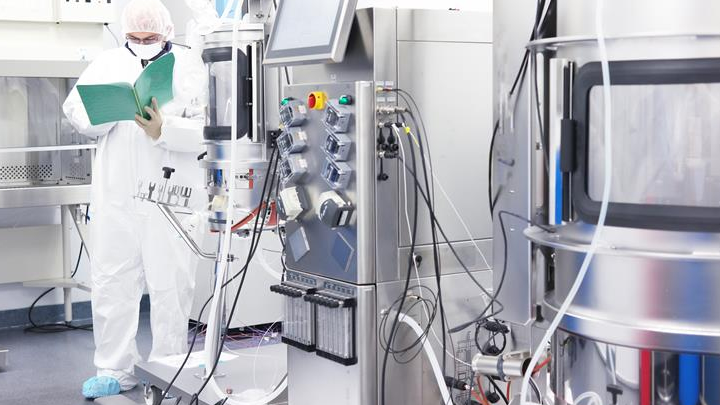
A Sterilisation Engineer is responsible for the development of sterilisation cycles and sterilisation assurance for new products in the medical field. The work of a Steilisation Engineer involves guiding processes related to sterilisation and making recommendations to increase efficiency.
Sterilisation Engineers develop and implement sterilisation adoption studies and comparative resistance studies for new products.
Work includes developing new sterilisation cycles as required along with the assistance in the isolation and identification of any unusual contaminants.
Sterilisation Engineers can work on project teams providing sterilisation expertise to help build internal knowledge and aid in the business decision making of a company.
The work is laboratory based and employment opportunites can be found with most pharmaceutical or medical devices companies.
Most commonly reported Work Tasks
- Drill and tap holes for rivets, and glue, weld, bolt, or rivet parts together to form prosthetic or orthotic devices.
- Read prescriptions or specifications to determine the type of product or device to be fabricated and the materials and tools required.
- Make orthotic or prosthetic devices, using materials such as thermoplastic and thermosetting materials, metal alloys and leather, and hand or power tools.
- Bend, form, and shape fabric or material to conform to prescribed contours of structural components.
- Construct or receive casts or impressions of patients' torsos or limbs for use as cutting and fabrication patterns.
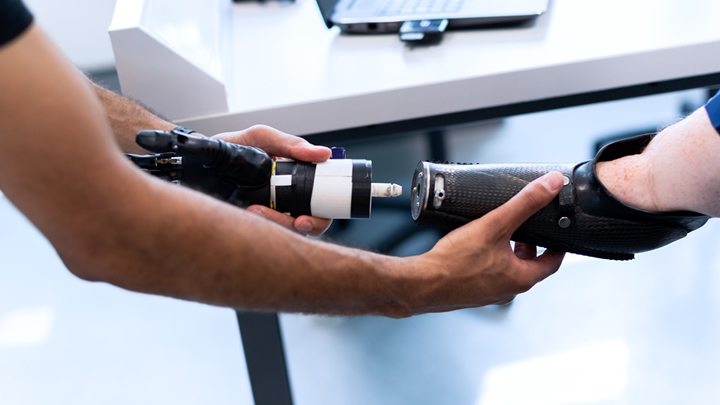
- Repair, modify, or maintain medical supportive devices, such as artificial limbs, braces, or surgical supports, according to specifications.
- Cover or pad metal or plastic structures or devices, using coverings such as rubber, leather, felt, plastic, or fiberglass.
- Test medical supportive devices for proper alignment, movement, or biomechanical stability, using meters and alignment fixtures.
- Lay out and mark dimensions of parts, using templates and precision measuring instruments.
- Fit appliances onto patients, and make any necessary adjustments.
Qualities - Sterilisation Engineer
- Good practical and technical skills
- Accuracy and attention to detail
- An awareness of health and safety issues
- An enquiring and analytical mind
- The ability to meet deadlines
- A methodical approach to your work
- Strong problem-solving skills
- Good maths and IT skills
- Good communication skills
- The ability to work alone and in a team
Interests - Sterilisation Engineer
This occupation is typically suited for people with the following Career Interests:
Investigative
The Investigative person will usually find a particular area of science to be of interest. They are inclined toward intellectual and analytical activities and enjoy observation and theory. They may prefer thought to action, and enjoy the challenge of solving problems with sophiscticated technology. These types prefer mentally stimulating environments and often pay close attention to developments in their chosen field.
Naturalist
Not surprisingly, some aspect of the natural sciences will run through the Naturalist's interests - from ecological awareness to nutrition and health. People with an interest in horticulture, land usage and farming (including fish) are Naturalists.
Some Naturalists focus on animals rather than plants, and may enjoy working with, training, caring for, or simply herding them. Other Naturalists will prefer working with the end result of nature's produce - the food produced from plants and animals. Naturalists like solving problems with solutions that show some sensitivity to the environmental impact of what they do. They like to see practical results and prefer action to talking and discussing.
Administrative
Administrative people are interested in work that offers security and a sense of being part of a larger process. They may be at their most productive under supervisors who give clear guidelines and while performing routine tasks in a methodical and reliable way.
They tend to enjoy clerical and most forms of office work, where they perform essential administrative duties. They often form the backbone of large and small organisations alike. They may enjoy being in charge of office filing systems, and using computers and other office equipment to keep things running smoothly. They usually like routine work hours and prefer comfortable indoor workplaces.
Entry - Sterilisation Engineer
A Sterilisation Engineer is responsible for the development of sterilisation cycles and sterilisation assurance for new products in the medical field. The work of a Steilisation Engineer involves guiding processes related to sterilisation and making recommendations to increase efficiency. Works as part of a team of engineers in the manufacturing process of medical equipment.
Training & Development
FET Centre Traineeship: Laboratory Assistant, Manufacturing, Engineering Operations, Engineering Technology, Cleanroom operations, Quality management in centres around Ireland at NFQ Level 5-6 Search FET Courses
FET PLC Courses: Civil, Mechanical & Electronics Engineering, Engineering and Electronic Technology, Engineering Technology with Electronics, Pre-University Engineering, Engineering - Preliminary, Engineering Pre University, Engineering Technology, Laboratory Techniques at NFQ Levels 5-6 Search FET PLC Courses
Apprenticeship: Lab Technician, Lab Analyst, Allied Engineer Apprenticeships NFQ level 6-10 Search Apprenticeships
Higher Education CAO Entry: General Engineering, Microbiology, Biology, pharmaceutical manufacturing, Analytical Chemistry with Quality Assurance, Engineering or Science related discipline courses at NFQ Levels 7-8 Search CAO courses
Professional Development
Postgraduate Study Options Analytical Science with Quality Management, Pharmaceutical Quality Assurance & Biotechnology, Pharmaceutical Quality Assurance & Regulation, Pharmaceutical Technology & Quality Systems, Quality Management & Validation Course at NFQ level 9-10.
Engineers Ireland To apply for the Engineering Technician title, you will need an accredited Level 6 qualification and three years post graduate experience. A list of Engineering Technician accredited programmes is available from Engineers Ireland.
SFI Science foundation Ireland
Last Updated: April, 2023
Pay & Salary - Sterilisation Engineer
Salary Range (thousands per year)* €38k - €70k
Salaries vary based on employer, location, experience, duties, and role.
Data Source(s):
Lincoln/ Morgan McKinley/ CPL/ Talent/ Indeed/ Salary Expert/ Clark/ Osborne
Last Updated: July, 2024
* The lower figures typically reflect starting salaries. Higher salaries are awarded to those with greater experience and responsibility. Positions in Dublin sometimes command higher salaries.
View Salary information from Indeed.ie
Note: data not aways available
Labour Market Updates - Sterilisation Engineer
This information has been derived from the Solas National Skills Bulletin (2025).
Employment levels have fluctuated over the last five years, but overall, employment growth was above average, with an additional 5,500 persons employed since 2023.
Demand was evident across a range of data sources, including employment permits (aircraft, manufacturing, electrical, and quality), online job adverts (lab technicians, manufacturing, HVAC, avionics, electrical, production and mechanical technicians), difficult-to-fill vacancies including maintenance, manufacturing, and engineering technicians (Recruitment Agency Survey), as well as laboratory analysts (Skills for Growth).
Skills in demand included quality standards, problem solving, project management, and people skills. Supply from the education and training system remains strong. In 2023, there were 3,800 higher education awards at levels 6 and 7, with further possible supply from level 8 graduates who may begin their careers in technician level roles. Despite this, many graduates move to other roles or may already be in employment and shortages for certain technician-level roles persist. The intensity of any shortage will depend on the impact of US tariffs on EU trade on the sub-sectors where many of these technicians are employed.
Skills shortage:
Maintenance/ manufacturing /lab technicians
Useful Contacts - Sterilisation Engineer
-
Engineers Ireland
- 22 Clyde Road, Ballsbridge Dublin 4
- (01) 665 1300
- Click Here
-
Science Foundation Ireland
- Wilton Park House, Wilton Place, Dublin, 2
- 01 - 607 3200
- [email protected]
- Click Here