

Course Summary
The MSc in Psychology and Wellbeing is the next step for psychology graduates aspiring to bring strong theoretical and practical knowledge of factors influencing wellbeing to their work or future career.
College Link

Career Sectors
This course prepares you for working in the Career Sectors below. Follow the links to get a fuller understanding of the sectors you are preparing for.
Entry Requirements
Requirements
For admission to the M.Sc. in Psychology and Well-being, entrants will normally:
• Have a relevant undergraduate degree in psychology (or equivalent - e.g. psychology conversion) with a minimum H2.1 or equivalent
• Candidates must demonstrate eligibility for graduate membership of the Psychological Society of Ireland (PSI). Specifically:
- The study of psychology should be spread over at least three conventional academic years
- These modules must cover the core areas of psychology as identified by the PSI Biological Bases of Behaviour, Developmental and Lifespan Psychology, Social Psychology, Personality and Individual
- Differences, Cognitive Psychology, Research Design, Quantitative and Qualitative Methods (including Practical Component) and should include a capstone research project.
- The course should address ethical principles for psychological research and professional practice.
. International candidates who are non-native speakers of English must satisfy the University of their competency in the English language.
Application Details
Application Deadlines
Applications will be accepted on a rolling basis until the programme is full or until the following dates:
• Closing date for non EU applicants is 31st March 2026.
• Closing date for EU applicants is 31st March 2026.
Note applicants who require a study visa for the purposes of studying at DCU, are advised to apply as early as possible.
All entry requirements should be met before the commencement of the programme.
Queries
Queries from EU applicants should be directed to [email protected]
Queries from non EU applicants should be directed to [email protected]
To apply for this programme:
• All Applicants must apply through DCU's Student Application Portal.
• Academic Transcripts for each and every year of study with English translation if applicable.
• A detailed Personal Statement outlining Psychology qualifications, why you wish to complete this programme and how it fits with your current or future plans.
• Applicants are required to submit two recent academic references with their application. Reference Form DC765 (Full Time) click here Reference Form DC766 (Part Time) click here to be fully completed and uploaded with application.
• Please upload a CV under the "Supplemental Items & Documents" section.
• If applicable, provide evidence of competence in the English language as per DCU entry requirements.
Please see link http://www.dcu.ie/registry/english.shtml
Please note if you are a non EU student and require a study visa, you are not eligible to apply for part-time programmes as study visas are only granted for full-time programmes.
The programme commences in September 2026
The Student
Career Interests
This course is typically suited for people with the following Career Interests. If these interests do not describe you, this course may prepare you for work you may not find satisfying.
Social
The Social person's interests focus on interacting with the people in their environment. In all cases, the Social person enjoys the personal contact with other people in preference to the impersonal dealings with things, data and ideas found in other groups.
Many will seek out positions where there is direct contact with the public in some advisory role, whether a receptionist or a counsellor. Social people are motivated by an interest in different types of people and like diversity in their work environments. Many are drawn towards careers in the caring professions and social welfare area, whilst others prefer teaching and other 'informing' roles.
Career Progression
• Community
• Community Education
• Education
• Healthcare Sector
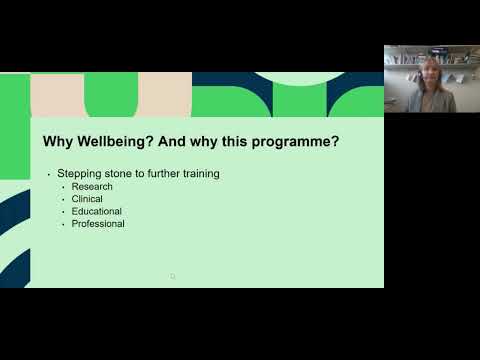
This programme provides an excellent springboard for students going on to further clinical. research or professional psychology training.
This programme would also benefit those who are working in applied settings including in education, community settings, mental health, family support, and clinical psychology.
Duration
Part Time 2 Years