A career in agriculture, horticulture or forestry can be very rewarding and fulfilling. You will have an opportunity to develop a lifestyle which competes very favourably with other professions, particularly with regard to quality of life and job satisfaction.
There is a very broad range of occupations in this sector. Below is a just sample of some of the popular occupations and those currently in demand:
See Occupations Database and search by sector for a comprehensive list.
Main occupations categories
• Research & Development
• Production
• Regulatory Affairs
• Quality Control
• Supply chain/Procurement/planning
• Environmental/ Occupational Health & Safety
• Biopharma Services
• Global Business Services
General Pharma Roles
Research & Development (R&D) is conducted by the industry primarily (in terms of investment) for discovery of innovative therapies. The early phases of discovery are often conducted in collaboration with research institutions (e.g., universities). Promising candidate drug compounds may also be obtained through licence from research organisations, or through acquisition of small companies. It is reported15 that up to 80% of new drug molecules in development originate from small companies rather than from research within big pharma. Further research (either internal or through external contracting) may also be conducted on delivery technology, and on enhancement of manufacturing processes.
Key personnel necessary for this activity include:
• Research Scientists engaged in drug discovery, formulation, delivery and process technology
• Biostatisticians and Bioinformatics Scientists
• Project Managers and Leaders
Production roles, and associated Process Development roles are integral to the pharmaceutical industry. These roles are variously involved in the development of the processes through which a pharmaceutical product will be manufactured and delivered; implementation of the manufacturing, finish and packaging processes; and support roles to ensure timely delivery, and adherence to regulatory and quality standards. Process development focuses on designing and optimizing the manufacturing steps, ensuring efficiency, scalability, and product quality, while ensuring staff and patient safety.
The following roles are necessary:
• Bioprocess Engineer/Technician
• Process development Scientist/Engineer
• Validation Engineer
• Manufacturing Technician/Operations
• Technical Support Specialist
• Operational Excellence (OE) Specialists
• Business Excellence Specialists
• Process Chemists
• Analytical Chemists
• Engineers
Regulatory Affairs – scientists work across all stages of drug development to ensure that products meet regulatory requirements. Specific roles needed here are:
• Regulatory Affairs Specialists
• Regulatory Compliance Officer
• Labelling and Packaging Specialist
• Regulatory CMC (Chemistry, Manufacturing, and Controls) Specialist
• Clinical Trial Regulatory Coordinator
• Pharmacovigilance Specialist
• Regulatory Intelligence Specialist
• Regulatory Affairs Writer
• Regulatory Affairs Coordinator/Scientist
• Clinical Research Associate (CRA)
Quality Control – personnel are responsible for testing and monitoring the quality of raw materials, intermediate products, and final drug products to ensure they meet regulatory standards and process needs. Specific roles here are:
• Quality Control Analyst/Technician
• Analytical Chemist
• Documentation Specialist
• Validation Specialist
• Stability Coordinator
• Compliance Officer
• Quality Assurance Auditor
• Data Integrity Specialist
• Quality Control Coordinator
• Qualified Person
Supply Chain, Procurement and Planning specialists are responsible for managing the flow of goods and services into the company. Specific roles required are:
• Demand Planner/Analyst
• Procurement Specialist/Manager
• Inventory Manager/Analyst
• Logistics Coordinator/Manager
• Distribution Manager/Supervisor
• Supply Chain Analyst
• Compliance Officer
• Vendor Relationship Manager
• Supply Chain Coordinator
Environmental / Occupational Health & Safety (EHS) Ensures compliance with regulations, safeguards employee health and safety, manages hazardous materials, and reduces environmental impacts. EHS programs promote sustainable practices, protect workers, and maintain high standards of safety and quality in pharmaceutical manufacturing.
Specific roles include:
• EHS Manager/Director
• Occupational Health and Safety Specialist
• Environmental Compliance Specialist
• Hazardous Materials Manager
• Ergonomics Specialist
• Industrial Hygienist
• EHS Compliance Officer
• EHS Training Coordinator
• Sustainability Specialist
• EHS Data Analysts
• Process Safety Specialist
In addition to these roles, there are also management roles to ensure coordination and interaction between all these functions, and with external collaborators and stakeholders.
Biopharma Service Roles
The Irish Biopharma sector is highly diverse in terms of product types, ownership, scale and in many other ways. A notable feature is that the major players are global companies that conduct only a portion of their process functions within Ireland. The major function is manufacturing, but services account for approximately 20% of total employment of IDA clients in the sector in Ireland.
Global Business Services provides centralized and shared services to support various functions within client companies. They are not pharma-specific and typically serve a range of sectors with services such as finance, treasury, IT and HR functions.
Relevant roles include those relating to the following:
• Global Process Owners
• Global centres of excellence (COE) leads
• Environmental, social and governance (ESG)
• Data and digital privacy and security
• Enterprise infrastructure
• Generative AI and machine learning
• Advanced analytics
• Cloud-optimized solutions
• User experience (UX)
• Expertise in transfer pricing, VAT, international corporate tax
• International treasury
• US GaaP and international statutory Financial Accounting
• Transformation and project management
• Multi-lingual skills
• Compliance
• Social media
Biopharma Services are operations whose services are specific to the Biopharma industry such as clinical trial management, regulatory affairs, medical affairs and commercial support for global operations. Some of these providers are units of global companies that are based in Ireland because their centralisation can create greater value for these corporations. Others are indigenous companies which provide essentially the same services to both Irish and global clients. Examples include APC, Simotech and ICON. The skills they provide to the Biopharma industry are in short supply across the world. Roles relating to the following are essential for this subsector:
• Product regulatory
• Digital health and digital commercial enablement – Market facing solutions
• Procurement and supply chain
• Commercial operations: Healthcare professional and patient engagement, sales and marketing operations
• Market access, health economics and real-world evidence
• Global Medical Affairs
• Trial management operations, including regulatory and scientific writing
• Pharma legal and compliance
Specialty Pharma Services – job roles relevant to this subsector would include skillsets relating to general Biopharma, manufacturing and services roles, depending on the specific activities of individual firms.
Future skills
According to the World Economic Forum’s Future of Jobs 2020 report, 50% of workers will need to learn new skills by 2025. What are now considered core skills will also change, impacting 40% of current workers within less than a year. This annual assessment has listed critical thinking and problem-solving as critical new skills each year. In the latest report, self-management skills such as active learning, resilience, stress tolerance and flexibility have also been added.
A March 2020 article in The Irish Times noted gaps between the skills that employers are looking for and graduate competences. That same article highlighted a sought-after mix of skills and competences characteristic of an “increasing confluence between sectors such as information and communications technology (ICT), business and engineering, which were once considered to be unique disciplines in their own right”.
That confluence can be readily observed in an industry profile of the advanced manufacturing sector published by the World Economic Forum in October 2020. The profile identifies the top ten skills considered a priority for reskilling and upskilling programmes in advanced manufacturing, as below:
• Technology use, monitoring and control
• Analytical thinking and innovation
• Complex problem-solving
• Technology installation and maintenance
• Critical thinking and analysis
• Technology design and programming
• Quality control and safety awareness
• Service Orientation
• Management of financial, material resources
• Leadership and social influence
Multiple national and international publications suggest that by 2025 more than 85 million jobs will be displaced by a shift in the division of labour between humans and machines. Notably, 97 million new roles are predicted to concurrently emerge that are more adapted to the new division of labour “between humans, machines and algorithms”.
Such figures highlight the need to prepare workforces for these new and emerging roles. Education and training opportunities must be designed to facilitate the upskilling of the current manufacturing workforce. The crucial role that upskilling opportunities will play in the coming years is highlighted in PwC Ireland’s 2020 CEO Survey. 57% of CEOs responded that upskilling is the most important action to close the skills gaps within their organisations, up 30% from the year before.
Digitalisation processes and a move towards Industry 5.0, are reconfiguring the boundaries of manufacturing in Ireland and around the globe, and reshaping the skills required from workers in the sector.
An August 2020 publication by McKinsey & Company notes that the wave of automation and digitisation in operationally intensive companies has now entered a new stage, accelerated by the Covid-19 pandemic. The report suggests that up to 58% of the work activities in the manufacturing sector alone could become automated using currently demonstrated technologies, creating an acute reskilling challenge. A 2021 Bloomberg report echoes the predictions of greater automation in manufacturing to compensate for labour shortages, noting that within this context growth is anticipated for “enterprises providing the skills of the future to the next generation of workers, many of whom could be working alongside robotic counterparts”.
The factors at work in the Biopharma sector have been outlined in different ways above. There is a clear general need for employees with a broader knowledge base. People previously engaged in managing production processes will need to understand digital processes, and to be able to manage and use the data emerging to create efficiencies.
In terms of technology, biologics will continue to grow and the diversity of its therapies and of their mechanisms of production will create challenges for manufacturing staff. Some personalised therapies will require greater interaction between those manufacturing products and clinicians involved in their administration to patients. Staff will therefore need to have the social skills required to communicate with other colleagues who are users or generators of data within the company.
Are you someone who thinks that the Seafood Industry is only about boats, fish catches and a life on the ocean wave?
Well, think again. The modern Seafood Industry includes a wide range of specialisations and career opportunities to suit every skill set.. So whether you're academic or entrepreneurial, creative or hands on, take some time out to think Seafood, and listen to the call of the sea.
Who knows? It might be calling to you.
The list below gives an overview of the occupation areas:
Commercial Fishing
Engineering
Aquaculture
Seafood Processing
Other Related Maritme Occupations include:

In addition, the Department itself is staffed by Civil Servants under the management of a Secretary General. These staff work in various units, such as:
In general, teachers are recruited by the school board of management, or by the local Education and Training Board (ETB).
Teaching posts are usually advertised in the national and local press. Approved websites for teaching vacancies and substitute panels are:
There has never been a more exciting time to work in the construction industry. It is a rapidly growing industry that offers an exciting career in many varied roles such as:
The industry is constantly evolving. With new developments in modern methods of construction and digital construction so pivotal now, there is a diverse range of career options both on and off building sites.
We need young vibrant people who are creative, innovative and tech savvy with problem solving abilities, who are driven to succeed.
Everywhere you look, the construction industry has designed and built all that you see – hospitals, houses, roads, bridges, schools, colleges, sports clubs, and all other built infrastructure that we rely on every day to make our lives better.
Depending on your aptitude and abilities, there is an opportunity to work in a dynamic growing sector and in an environment that both challenges and rewards.
When thinking of jobs in construction, you may immediately think of trades ( as outlined below), and this may not be the area you are interested in. That being said, there are a vast array of opportunities in construction in varied roles - for instance, business development, technology based skills such a Building Information Modelling as well as project management , contract management and legal services.
Find full details on the main apprentice-based occupations and craftworker categories including: Electrician; Plumber; Carpenter & Joiner; Stone mason; Bricklayer; Pipefitter; Painter and Decorator; Tiler; Sheet metal worker etc.
Professionals in the sector include:
There are also Operative-level occupations:
• Machinery operators
• Skilled General Operatives
• Technical General Operatives
Open to second level (TY, 5th & 6th year) students who have completed a work experience placement related to the Construction industry or who would like to complete a career investigation on a future careeer of interest to them in the construction industry.
Full competition entry details here.

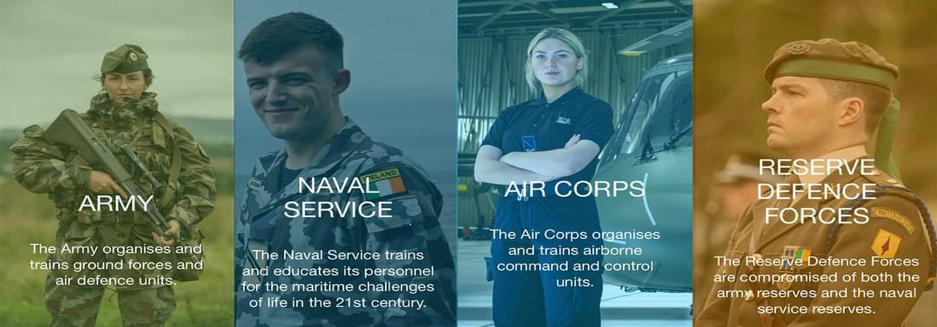
The main occupations in the Irish Defence Forces are:
Army
Video: Engineering with the Defence Forces
| Find out more about Army Careers here including videos and FAQs |
| Find out more about Naval Service Careers here including videos and FAQs |
| Find out more about Air Corps Careers here including videos and FAQs |
Advice for Guidance Counsellors
Check out the Defence Forces YouTube Channel to for more information on what life is like working with us.
Physical & Mathematical Sciences is a broad sector, with many potential career paths for those with qualifications and suitable skillsets, including medical work, engineering, teaching, finance and technology.
Sample occupations include,
For more examples click here
There is a diverse range of careers in craft and design which are equally challenging, innovative and fulfilling. Training as a craftsperson or designer opens up a variety of career opportunities. You could be a self-employed designer/maker in areas such as fashion, textiles, ceramics, jewellery or furniture design, or how about working as a design consultant, a museum/gallery curator, a retail buyer, college lecturer, multimedia CAD designer or even a trend forecaster. There is a wide range of options open to you by simply following your desire to express yourself through your skills and creativity.
You could consider becoming:
Get inspired to pursue an exciting career in the craft and design sector! View work from a range of makers and designers as varying stages of their careers:
Future Makers works to support third level students and emerging makers who wish to persue a career in the craft and design sector: www.futuremakers.ie
Design Ireland connects a diverse community of makers retailers and design lovers in a commercial and creative space:www.designireland.ie
PORTFOLIO actively works to grow the reputations of makers across all major disciplines of contemporary craft. Featured makers are those producing innovative objects, either one-off pieces or limited editions, and working to high standards of design quality and technical skill: https://portfolio.dccoi.ie/
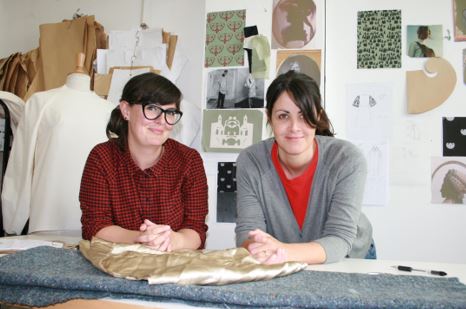
TISSUE is a womens ready-to-wear label based in Dublin. Our clothing is designed and made in Ireland using high quality natural fabrics. TISSUE clothes are 100% ethically and sustainably produced. http://www.tissue.ie/
We work on very different schedules. Hannah is an early bird, in the studio by 8.30am and out the door at 4pm, Gráinne works better in the evening. We start each collection with a chat about what has been on our radars lately, in terms of cultural theory/design ideas etc. and then set out design and production deadlines and go from there. Gráinne does all our print design so she’ll be off drawing and tinkering on the computer and Hannah works on the garment design and construction process. Each collection is supported by ongoing visual research, we have a giant mood board in the studio and we often break to discuss what way things will work together. There is a lot of admin involved as well so that takes up quite a lot of time. We have a shared studio space with a few other designers so there is a really nice supportive and creative atmosphere.
To meet the current and expected increase in jobs, trained staff are needed at the technical, trade and professional levels. They need the knowledge and skills to develop, promote and implement new methods of sustainable energy production and improve the efficiency of existing systems and appliances. They need training in a wide range of knowledge areas including the social, environmental, economic, technical and scientific aspects of energy generation in a sustainable manner.
Some of the areas of employment, which can relate to energy efficiency and/or renewables, include:
Opportunities are likely to exist in:
The sector needs to attract committed and skilled individuals from other industries. If you have skills and experience which could be focused on any part of the renewables revolution, there are opportunities for you.
Three-quarters of Ireland’s top engineers believe the "green economy" will drive Ireland’s economic future, according to research commissioned by Engineers Ireland. The survey of more than 400 engineers, carried out by Ipsos MRBI, also found 32 per cent of engineers see sustainable energy as the area where engineers can make the biggest contribution.
Sector-specific occupations include:
The Space Industry offers a wide variety of careers and opportunities. You might be surprised at the variety of opportunities across maths, physics, chemistry, engineering and computing.
Read career stories directly from people working in the industry HERE