The Public Sector is at the heart of economic and social life in Ireland, and the services delivered by and within the Civil and Public Service directly influence people’s lives.
Made up of 18 different Government departments and many other offices and agencies including the Local Authorities, the Irish Health Service Executive and An Garda Síochána, the crucial overall function of the Public Sector is to serve and assist the Irish public. Among many other things, this involves working alongside the Government, helping in the drafting of new legislation, and ensuring timely and efficient implementation of policies and services.
The services delivered by and within the Irish Public Sector today directly influence the ways in which the country is experienced and regulated and has a great impact on the ways in which Ireland is perceived both at home and globally. As a result, whether implementing policies, delivering crucial services, or facilitating the regulation of vital resources, the Public Sector requires an extremely diverse, varied and dynamic workforce of people with a range of expertise, interests and talents.
The Public sector is involved with everyday life issues, changes, and innovations -constantly resulting in developments and continuous advancements that improve the lives of the Irish people and ensure that the best possible service is delivered. Working within the Civil and Public Service offers the unique opportunity to assist in the provision of vital services that influence and shape Irish society today.
To do this work, we need to be continuously adding new talent to our team in the form of committed, ambitious individuals with an interest in developing policy and improving services delivered to the public in Ireland.
If this sounds like something that would interest you, then be sure to check out our website at www.publicjobs.ie and read on about our opportunities.
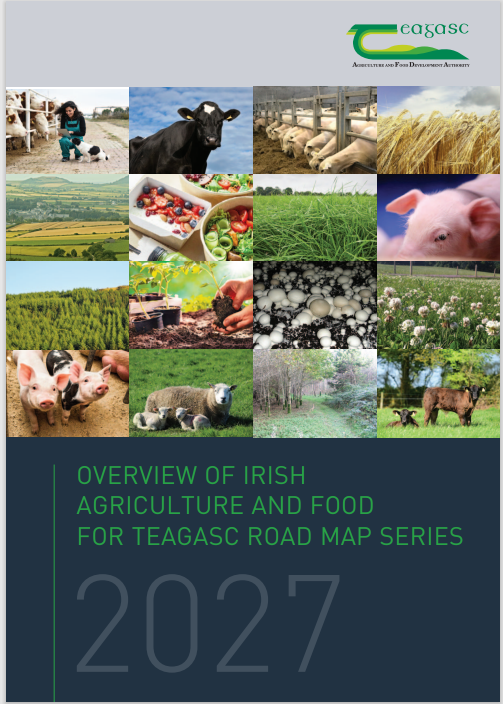
Irish agri-food gross value added accounted for 6.7% of modified gross national income (GNI) (Euro 14.8 billion), 9.5% of total merchandise exports, and 7.1% of employment in 2019.
One of Ireland’s greatest success stories and a major driver of the national economy, over 90 biopharmaceutical and pharmaceutical and chemical companies make up the Irish BioPharmaChem industry, including eight of the world’s top 10 Biopharma companies.
With activities centred around manufacturing and services, the sector employs over 80,000 people directly and indirectly, has an export value of over €116 billion annually, and makes up some 20% of the Irish GDP.
Ireland’s biopharmaceutical industry is a global hub of innovation and manufacturing excellence that has evolved into a cohesive research and innovation ecosystem involving close collaboration between researchers in higher education institutions, private enterprise, and Government.
Important opportunities for the sector here include a move up the value chain towards drug discovery and development, including digital therapeutics and leveraging Ireland’s significant research capabilities in biotechnologies, microbiome science, advanced materials, drug delivery, data analytics and modelling.
Biopharma manufacturing can be divided into Small Molecule (synthetics) and Biologics (large molecule). Whilst traditional Small Molecule manufacturing has continued to grow significantly in recent years and there has been a rapid increase in the growth of biologic therapies, with employment in this subsector having increased by 98% in the last 10 years.
Furthermore, Advanced Therapeutic Medicinal Products (ATMPs) or Cell and Gene Therapies (CGTs) are emerging as an important area of future growth.
Ireland is increasingly becoming an important global hub in the provision of services in Biopharma, with employment growth in services subsectors growing more rapidly in recent years. Services subsectors include Global Business Services, Biopharma Services and Specialty Pharma Services.
The Irish Seafood industry is currently valued at 1.4bn euro and employs over 17,000 people.
The four main activities in the Irish seafood industry are covered by:
Ireland has the ambition to position itself as an international leader in the global seafood industry. Read: Food Wise 2025 strategy.
Some 1 million full-time students use the education system in Ireland each day, attending primary, secondary, further and higher education institutions aided by the Department of Education and Skills. There are some 870,000 students in primary and secondary education in Ireland, with approximately 146,000 sitting the Junior Certificate and Leaving Certificate examinations each year.
The Irish Education System Structure
Preschool
Children may attend preschool before starting primary school. Many children participate in the Early Childhood Care and Education Programme (ECCE), which provides free preschool for eligible children, usually for two years before primary school.
Primary School - Children usually attend primary school from age 5 to 12 (Junior Infants to 6th Class)
Post Primary has two main cycles.
Junior Cycle (3 years)
Students complete:
At the end, they take the Junior Cycle examinations in a range of subjects.
Transition Year (Optional)
Many schools offer a one-year Transition Year (TY) between Junior and Senior Cycle focusing on; personal development, work experience, Community involvement and career exploration.
Senior Cycle (2 years)
Students complete:
They usually study 6–8 subjects and prepare for the Leaving Certificate. The Leaving Certificate is the main qualification used for entry to higher education.
Further Education
After secondary school, students may choose further education instead of, or before, university.
Providers include:
Courses include:
Many FET qualifications can lead directly to employment or progression to higher education.
Third Level or Higher Education
30 Third Level colleges are funded by the Department providing services to over 279,000 full-time students.
Click here for a full list of these institutions.
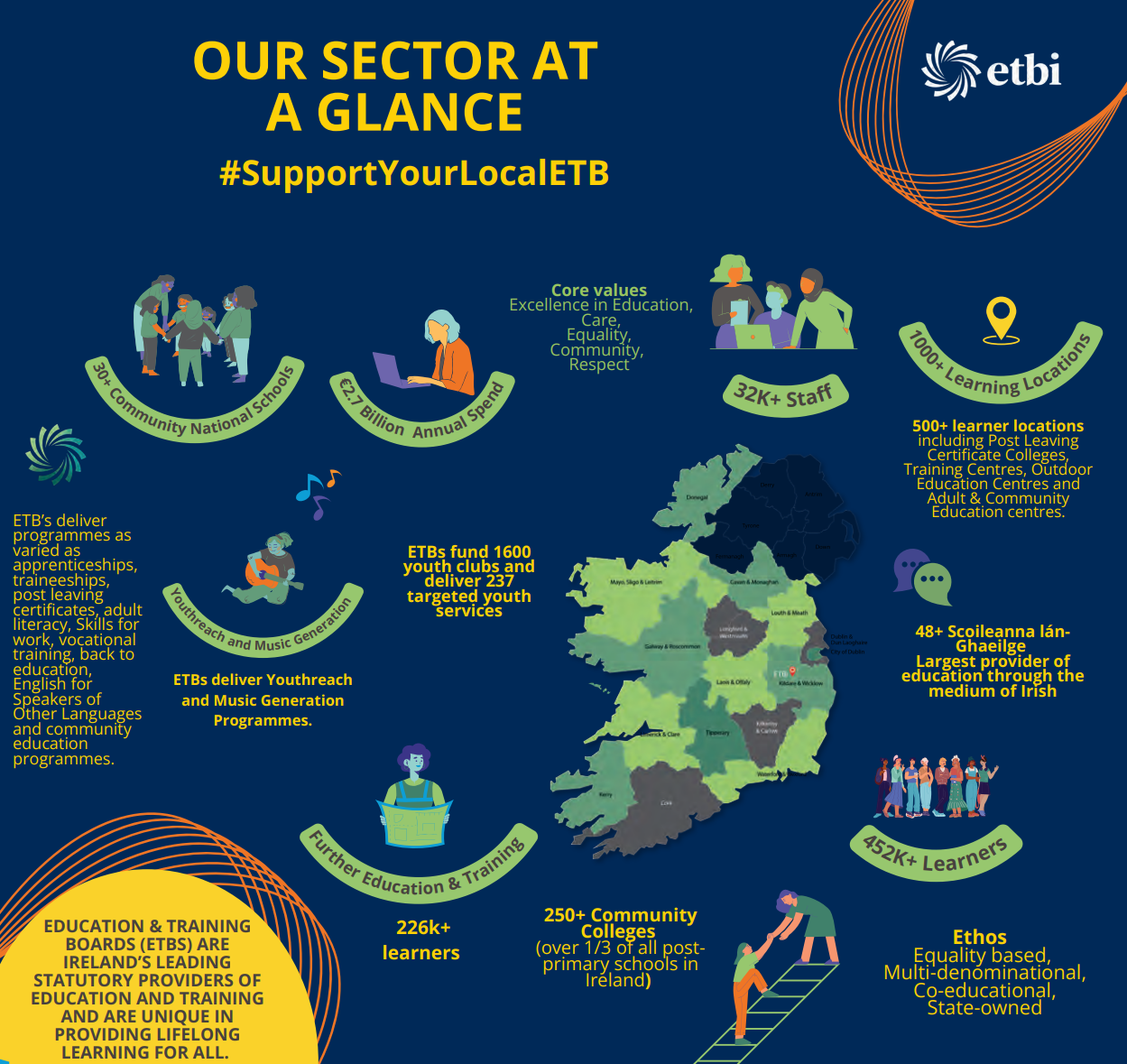
Education and Training Boards (ETBs) deliver education and training across primary, post-primary, further education, adult learning, apprenticeships, and youth services. ETBs are funded by the Department of Education & Youth and SOLAS.
The Irish Tax Institute is the leading representative and educational body for Ireland’s Chartered Tax Advisers (CTA) and is the country’s only professional body exclusively dedicated to tax.
The Chartered Tax Adviser (CTA) qualification is the gold standard in tax and the international mark of excellence in tax advice.
Our members work all over the globe from Ireland to the USA, Asia to Australia. They provide tax services and business advice to thousands of Irish-owned and multinational businesses as well as to individuals in Ireland and internationally. Many also hold senior roles in professional service firms, global companies, Government, and public bodies.
For further information on our tax qualifications and working in tax advisory, you can follow us on Instagram and LinkedIn visit taxinstitute.ie or call 01 663 1700.
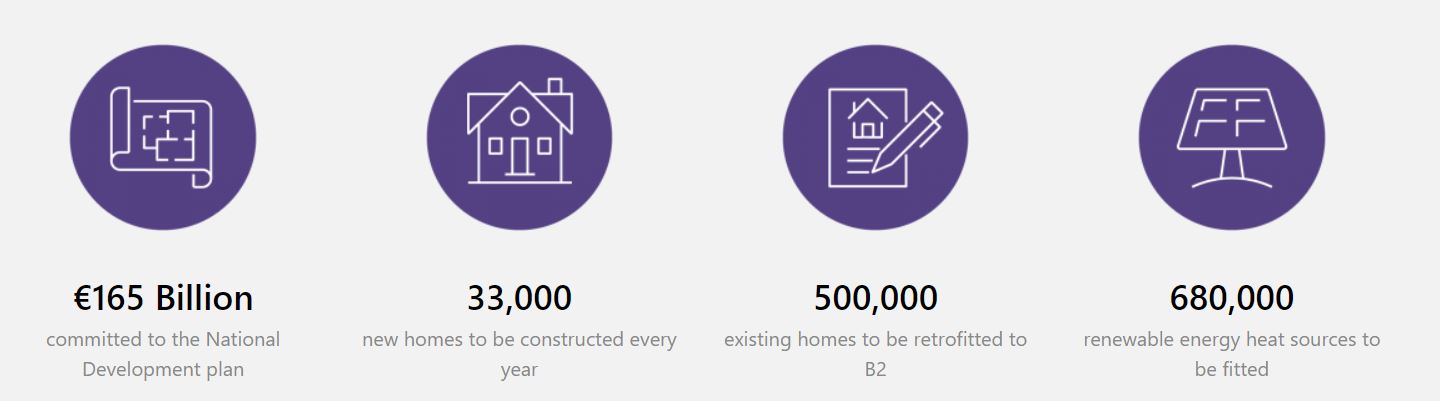
The construction industry is one of the largest employers in Ireland and is the industry that delivers on the infrastructure requirements to allow the Irish economy to flourish and grow. There are many facets to the industry from Civil Engineering , which constructs the nations roads, rail, water etc infrastructure, Mechanical and electrical which installs the technical capability into structures including electrical, broadband and industrial processes and of course the housing a residential sector.
There is much discussion about climate change and it is the construction sector that can deliver on the actions required to address some of these issues – such as construction of alternative energy sources, retrofitting of existing structures to increase their thermal efficiency etc. In short, the construction industry works to provide our citizens with the infrastructure for our daily lives.
There are many exciting possibilities to build a rewarding career in Construction whether you are interested in trade e.g. electrician or a profession , e.g. Engineer there will be a role for you. If you are a problem solver, interested in seeing the project you are working on taking shape and are committed to making the daily lives of our citizens better, then consider a career in construction. With the current housing shortage in Ireland there has been an ambitious plan of action set by Government to tackle this crisis.
What the Irish Defence Forces do:
Defend the State: To defend the State against armed aggressions; this being a contingency, preparations for its implementation will depend on an ongoing Government assessment of the security and defence environment.
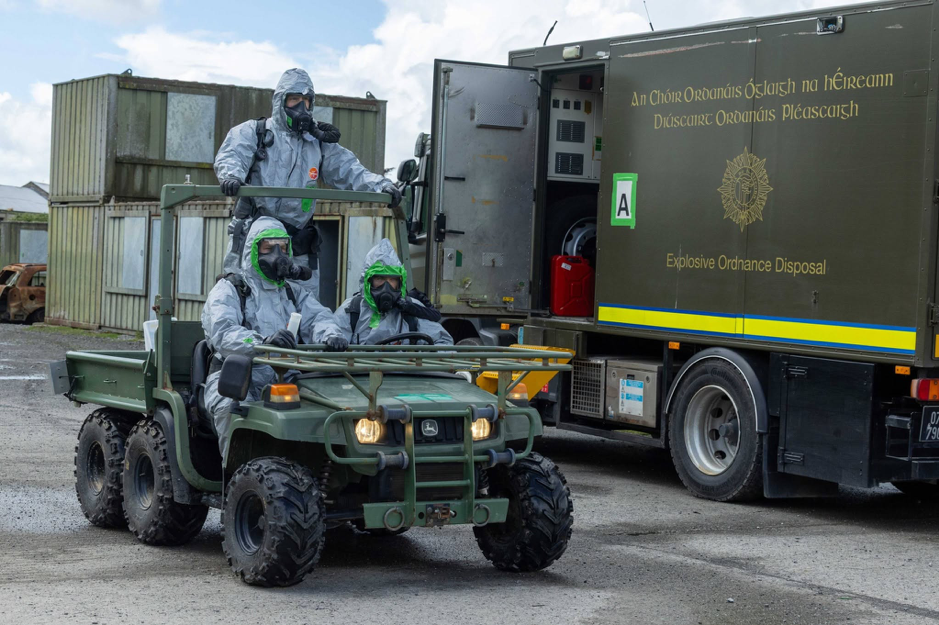
Aid the Civil Power: To Aid the Civil Power/Aid to the Civil Authority (meaning in practice to assist, when requested, the Garda Síochána, who have primary responsibility for law and order, including the protection of the internal security of the State).
Multinational Peacekeeping & Humanitarian Relief: To participate in multinational peace support , crisis management and humanitarian relief operations in support of the United Nations and under UN mandate, including regional security missions authorised by the UN.
Maritime Security & Fishery Protection: The Naval Service is the State’s principal seagoing agency with a general responsibility to meet contingent and actual maritime defence requirements. It is tasked with a variety of defence and other roles. Defence roles include defending territorial seas, deterring intrusive or aggressive acts, conducting maritime surveillance, maintaining an armed naval presence, ensuring right of passage and protecting marine assets.
Ceremonial: The Defence Forces participates in various national ceremonies throughout the year. Each service within the Defence Forces has a designated role to play during these ceremonies. Depending on the ceremony the Defence Forces involvement may consist of Guards of Honours, Gun Salutes and Musical recitals.
The Irish health service is the biggest employer in the country and provides public health and social care services to everyone living in Ireland. Our services are delivered to young and old, in hospitals, health facilities and communities across the country.
These range from public health nurses treating older people in the community to caring for children with challenging behaviour, from educating people on how to live healthier lives to performing highly-complex brain surgery, from planning of major emergencies to controlling the spread of infectious diseases.
Change and innovation for better healthcare delivery
Our population is growing, and increased need for health and social care due to age and growth in chronic disease is making our current system unsustainable. We are innovating our models of care to address this, and continue to shift our response from hospital to community and home, and to promote health and wellbeing.
In 2023, we made significant progress on change and reform in the health service. We are changing our organisation structurally, aiming to improve experience and outcomes for the people we serve.
Restructuring the HSE into six operational Health Regions is a key enabler for the wider introduction of universal healthcare and Sláintecare to deliver services that are:
In meeting the challenges of a significant reform agenda, eHealth will be a crucial enabler in delivering better, smarter healthcare, providing innovations and solutions that can improve access, efficiency, and quality of care.
Safer, better healthcare and ensuring that the patient is at the heart of everything we do are central to our Strategy. This emphasis seeks to ensure that people’s experience of the health service is not only safe and of high quality, but also caring and compassionate.
The delivery of better quality care requires that the HSE puts in place the most effective clinical care pathways that are integrated across acute, community and residential care settings. This is necessary to ensure that patients and service users are supported at all stages of the care journey and in the setting that is most appropriate to their needs.
HSE mission and values
The HSE’s vision is for a healthier Ireland, with a high-quality health service valued by all.
The HSE’s mission is to ensure that people in Ireland:
This mission is supported every day by the HSE’s core values. These shape attitudes and behaviour towards colleagues and the people who use the services.
The HSE’s values are:
These influence everything staff in the HSE do, from dealing with patients to actions at the executive and Board level.
The HSE encourages a culture where all staff live by these values every day, as they interact and deal with colleagues and members of the public.
Physicists want to understand how the world works, in every detail and at the deepest level. This includes everything from elementary particles, to nuclei, atoms, molecules, macromolecules, living cells, solids, liquids, gases, plasmas, living organisms, the brain, complex systems, supercomputers, the atmosphere, planets, stars, galaxies and the universe itself.
In addition to the pursuit of knowledge, physicists study questions facing today’s science and technology and they seek solutions for instrumentation, measurement techniques and innovations in areas as diverse as lasers and optics, medicine, space science, environmental sciences, electricity and magnetism and nuclear science.