Irish agri-food gross value added accounted for 6.7% of modified gross national income (GNI) (Euro 14.8 billion), 9.5% of total merchandise exports, and 7.1% of employment in 2019.
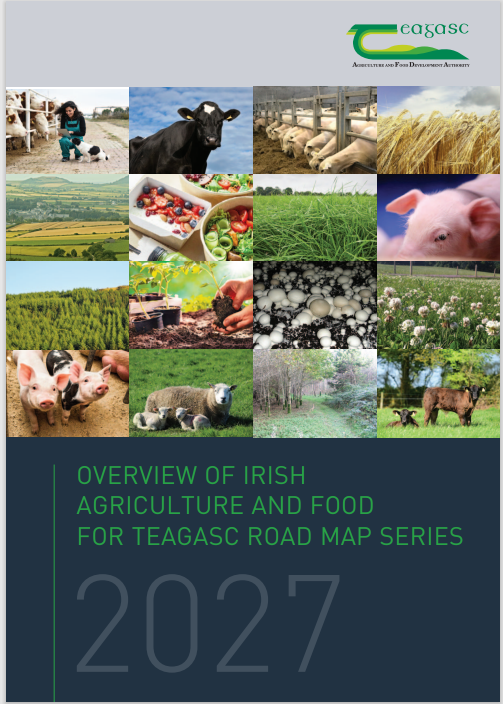
Irish food products are exported to over 180 countries worldwide and are generally perceived as high- quality safe products, with strong “green” credentials, as highlighted in recent years though the Bord Bia Origin Green programme, which is underpinned by food quality and assurance schemes at producer and processor level. Global and EU market policy-issues impact strongly on the Irish food sector, given that Ireland is primarily a food-exporting country (with approximately 80% of production exported). In 2020, Irish agri-food exports were worth Euro 14.1 billion. Ireland also imports agri-food products, and in 2020 these imports were valued at Euro 10.1 billion. Consumer branded food products, specialised ingredients for further processing by the Irish agri-food industry, as well as animal feeds were predominant in Irish agri-food imports.
Agri-food production and processing are particularly important in rural areas of Ireland, where other economic opportunities are more limited. Outside of the main urban centres, they account for a much larger share of income and employment; for example, the share of agriculture in the regional economies of the north and west of the country is more than double that of the average across the State as a whole.
Ireland has been judged to have a strong and integrated agricultural knowledge innovation system (AKIS) in comparison to other countries in the EU. This means that there is relatively good infrastructure of professional support available to the farming sector.
Despite its strengths and importance to the national and regional economies, the industry is currently facing a number of significant economic, environmental, production and social challenges, which will influence its future development.
At farm level, economic challenges include the current modest levels of farm scale and profitability for the majority of farming enterprises, which have led to an increase in part-time farming and a concentration of capital investment on larger, mainly dairy, farms. This dynamic may constrain the wider adoption of capital- intensive new technologies and on all other farm systems.
The environmental challenges facing the agri-food industry include meeting national commitments around reducing the volume of agricultural gaseous emissions (GHGs and ammonia), improving water quality and enhancing biodiversity. There is also an urgent need to reduce the risk of antimicrobial resistance (AMR), support integrated pest management (IPM) and reduce the use of pesticides in the tillage sector.
At farm level, there are a number of social and sectoral capacity challenges that are influenced in a significant way by an ageing farm workforce. These challenges include the need for measures to improve farmer health, safety of farms, and quality of life on farms and in rural Ireland. Action will be required to enable improved female participation within farm businesses and supports for more active and earlier farm succession planning and management.
Overall, the agri-food sector will need to improve the sourcing, management and retention of a high-quality, well-educated labour force. It will also need to increase its use of cost-effective automation and the exploitation of large data sets and digital technologies to support management decisions in relation to both improved farm income and environmental performance.
At regional level, agriculture and food will continue to anchor wider rural development. The development of the circular bioeconomy will bring new opportunities that will vary across different geographic regions. In the short term, this may include an increased focus on energy production and development of integrated woodlands, as well as niche food production and associated tourism and leisure activities. The facilitation of rural and farm-based entrepreneurship will be increasingly important for the achievement of balanced regional development. Publicly funded investment will be needed to ensure that physical and internet connectivity available to those living and working in rural Ireland is at least as attractive as that available in Ireland’s towns and cities.
There are a number of interconnected issues of significance which will affect the agrifood sector- i.e.
As a significant food exporter, these changes offer particular advantages which the Irish food sector can capitalise on and in the medium to long term should improve the image of the sector as a producer of quality food and as an employer.
There are now also interactions between the food sector and high-tech sectors that would not have been thought possible five years ago, providing new opportunities for growth.
See Future Skills Needs of the Food and Drinks Sector 2017.

Since its emergence from the quota era, the overall Irish agriculture and food sector has modernised and developed at a modest scale. The dairy industry has had the greatest impact across a wide range of metrics.
Overall, the agri-food sector is well positioned to supply high-quality food to adjacent and global markets from a sound environmental platform. Producers have shown that they are resilient and can be responsive to market and policy signals where they are timely and consistent. The modest income and ageing population involved in agriculture is a cause of concern, especially in the drystock sector, as it will limit access to capital and adoption of technology.
However, in general, Irish farms do not carry the burden of high long-term debt (sometimes related to succession) in comparison to other countries. Agriculture will thrive best in a future environment where a cohort of highly educated professional farmers can advance their businesses to generate an income that is comparable to other careers.
This will ensure that the sector will attract highly educated young people towards a farming career and within the sector, there will be capacity to reinvest in and adopt new digital and automation technologies.
Supporting a further cohort of part-time farmers who can supplement farm income by “working from home” will also be key to having a dynamic future modern agriculture open to new aspects of diversification and will enhance rural communities.
Ireland has strong heritage, knowledge and commitment to agriculture across many generations. Ensuring the sector is attractive to well-educated and ambitious young people and supported by strong and dynamic AKIS will be key to its longer-term development and success.
For more information about Irish agriculture and food, for sectoral roadmaps and an overview of the sectoral roadmaps, click here.